
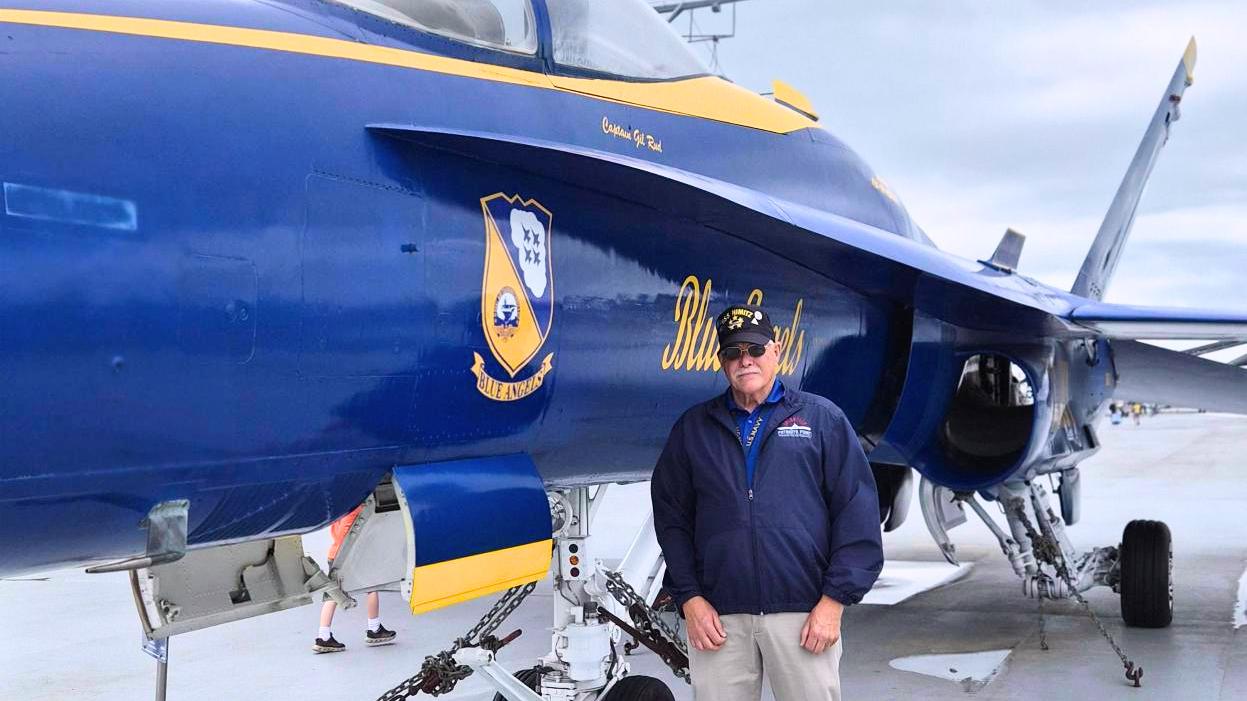
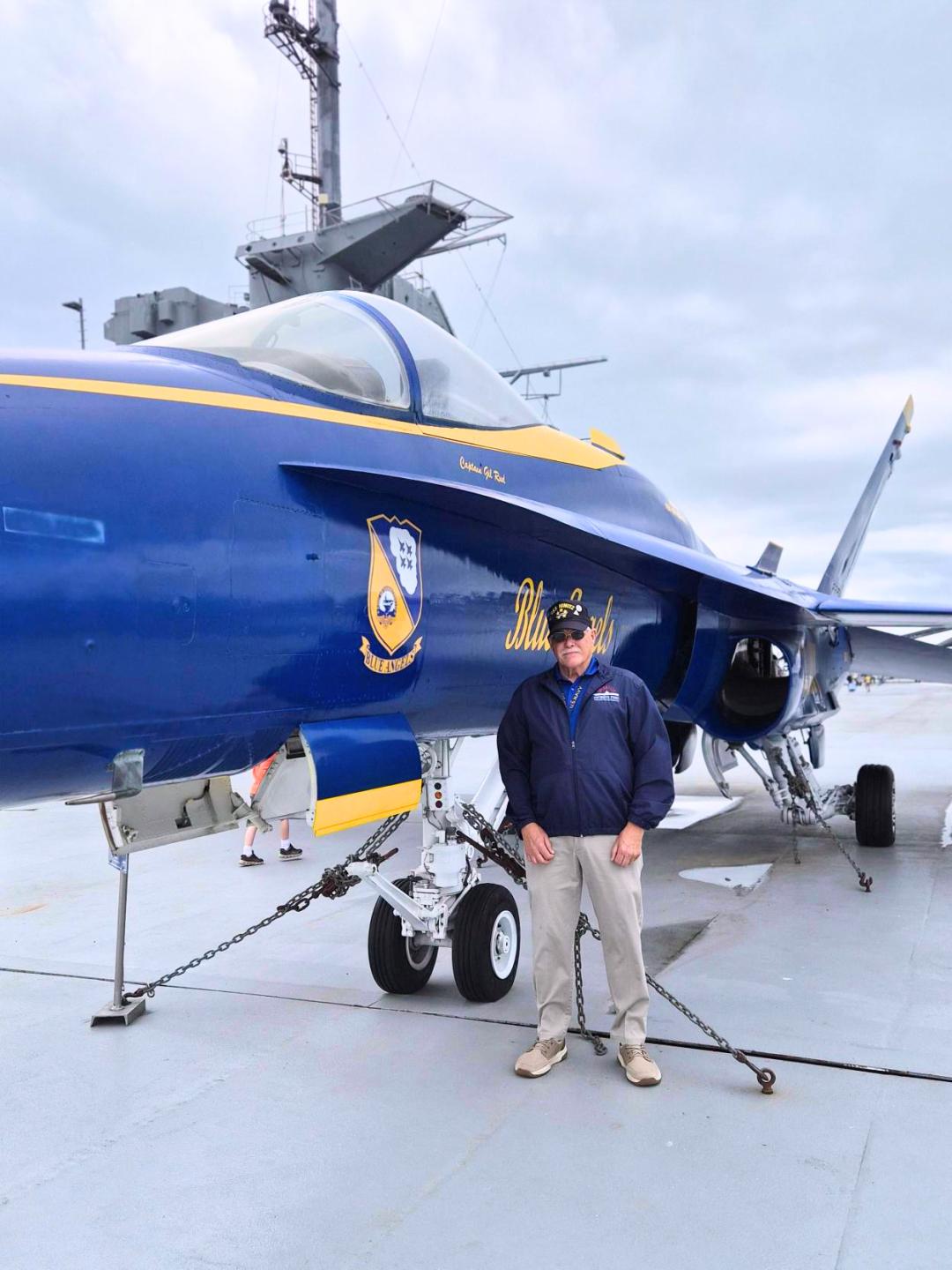
The 2026 Charleston Airshow brought scores of people to the waterfront, all waiting for that familiar sound to roll in overhead. When the Blue Angels finally cut across the sky for practice, it felt almost effortless. Tight formations, clean lines, perfect timing.
What you don’t see in that moment is everything that made it possible.
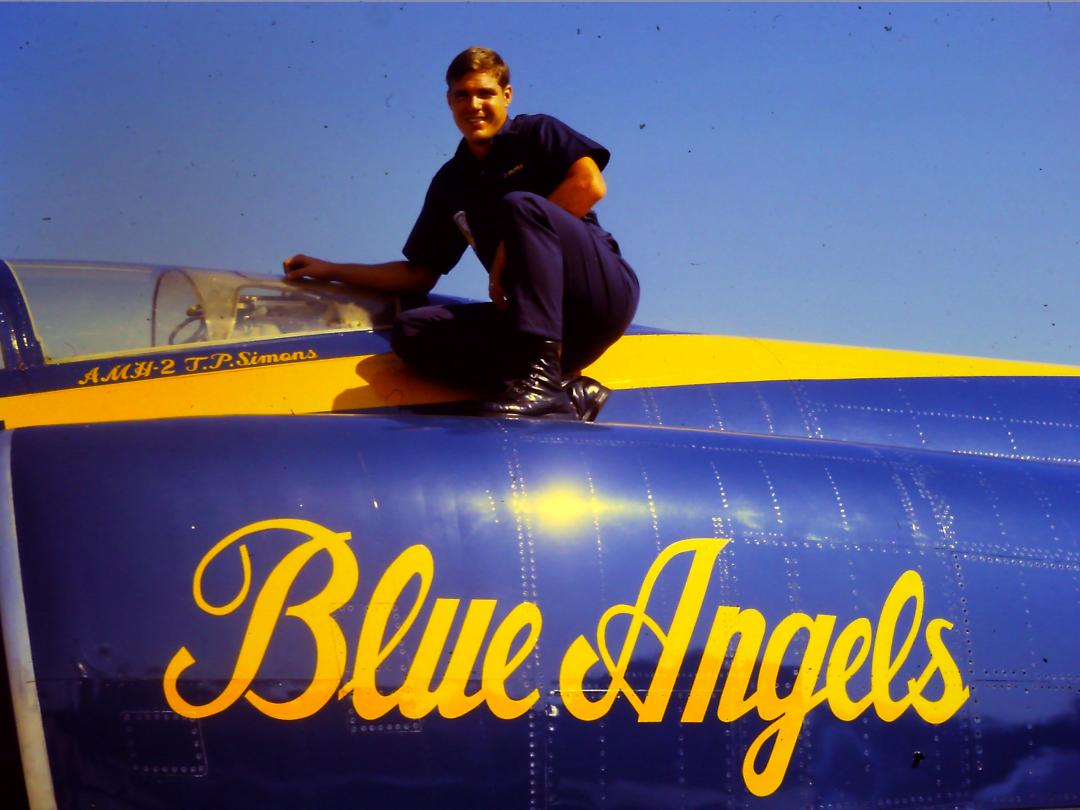
For Navy veteran and Patriots Point volunteer Tom Simons, that work started long before the crowd. He joined the Navy in 1967 and made his way to the Blue Angels in the summer of 1971, putting in a request during reenlistment after a call went out for enlisted personnel. When he arrived, he was assigned as one of two crew chiefs on the #1 aircraft, stepping into a role that demanded complete ownership of the plane.
During show season, that aircraft wasn’t just assigned to him, it was his. Every day. Every flight. Every detail.
“You know exactly how the pilot wants the plane,” he said.
That understanding wasn’t optional. It was built over days that didn’t end when the demonstration did. After each show, when the noise faded and the crowd moved on, the work started again. From cleaning and inspecting to fixing anything that needed attention, no matter how long it took.
Because by the next morning, it all had to be ready.
The Blue Angels team learns this through strategic training. Weeks spent in California, where the pace is relentless. Pilots and their crew working toward a standard that leaves no room for error. It takes around a hundred practice demonstrations before the team is cleared to begin the season. That rhythm carries them from mid-March through early November, ending in Florida, before starting all over again.
During Tom’s time, aircraft changed from the F-4 Phantom to the A-4 Skyhawk, and roles shifted along the way. Simons, who remained with the Blue Angels until 1975, moved from the #1 aircraft to the #3, and later to the #5 lead solo plane, but the expectation stayed the same.
“It’s a privilege. We ride around the country in a nice C-130, we wear fancy show uniforms with Blue Angels written across the back, and we stay in hotels—everyone sees that,” Simons said. “But they don’t see the late nights and the long hours.”
When the Blue Angels pass overhead, what you’re really seeing isn’t just a moment of precision. It’s the result of countless hours behind the scenes, carried forward by people whose work is written into every line those jets leave behind.