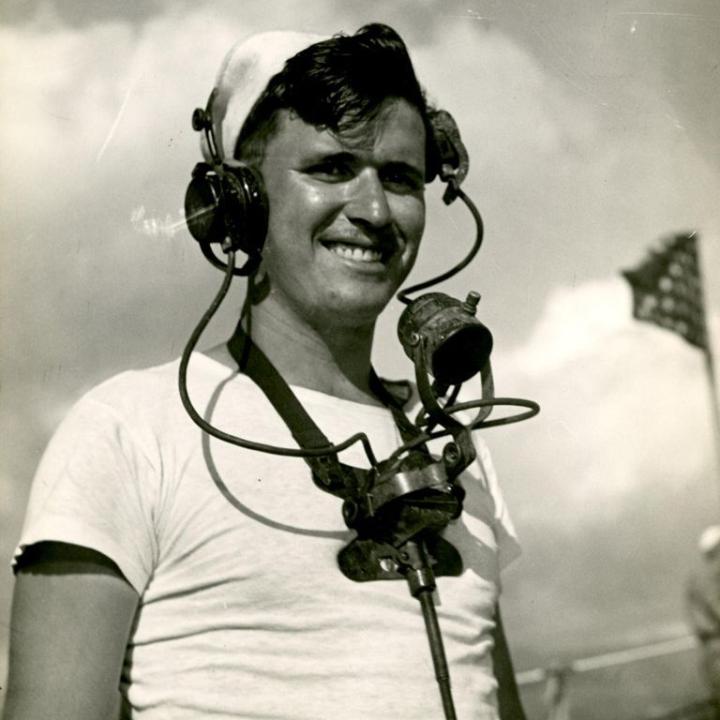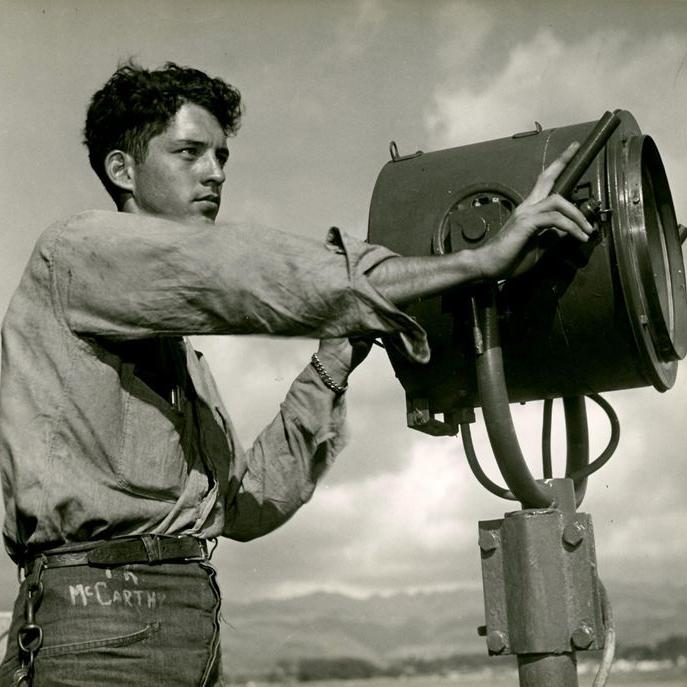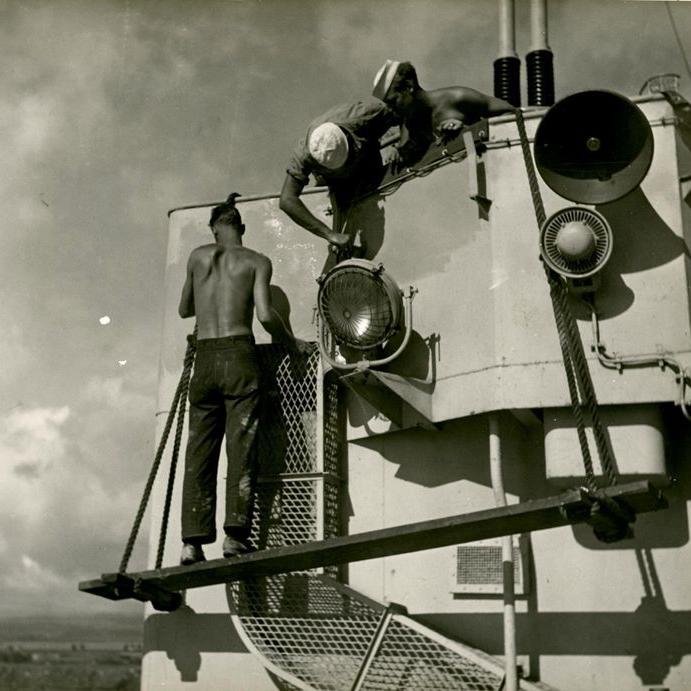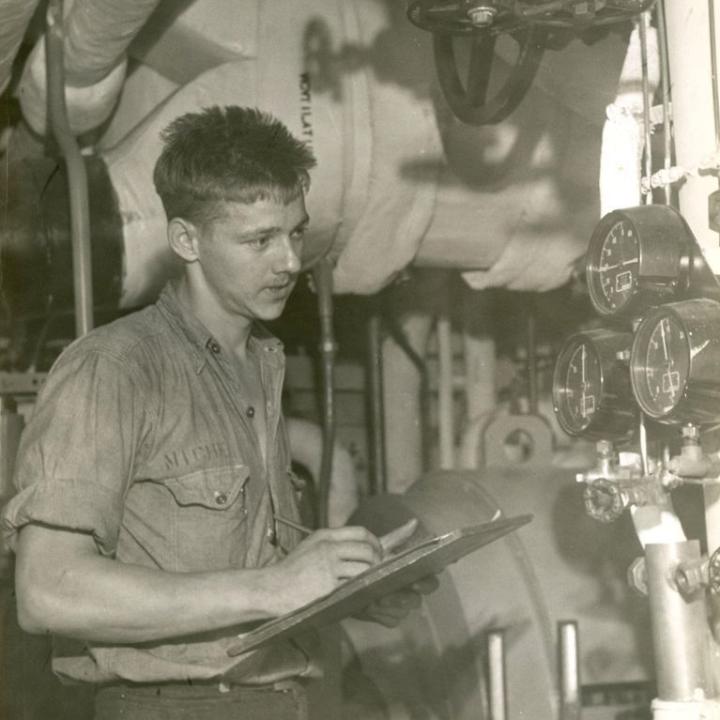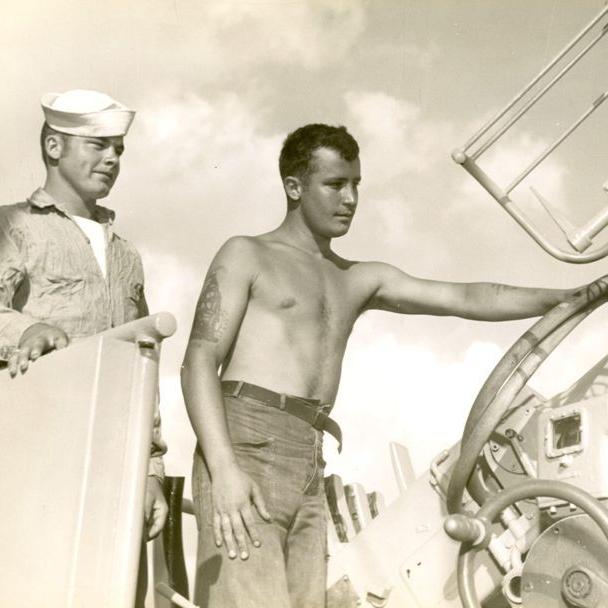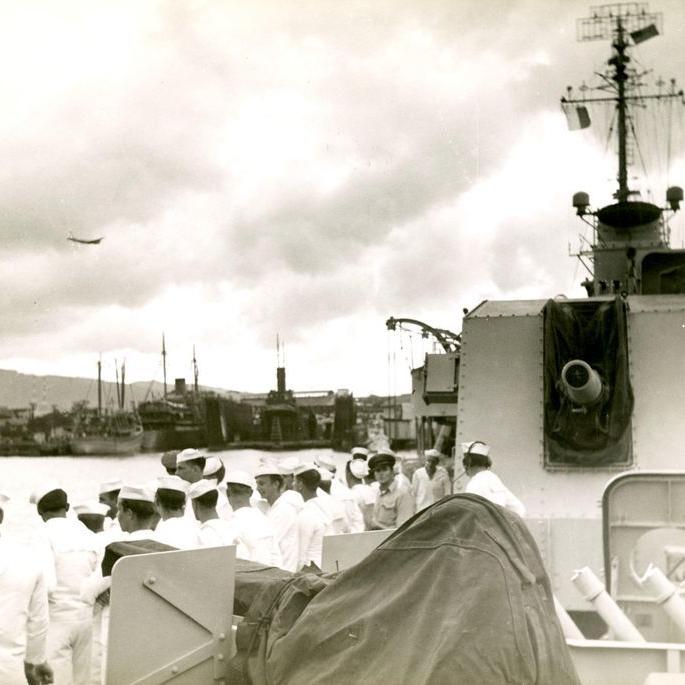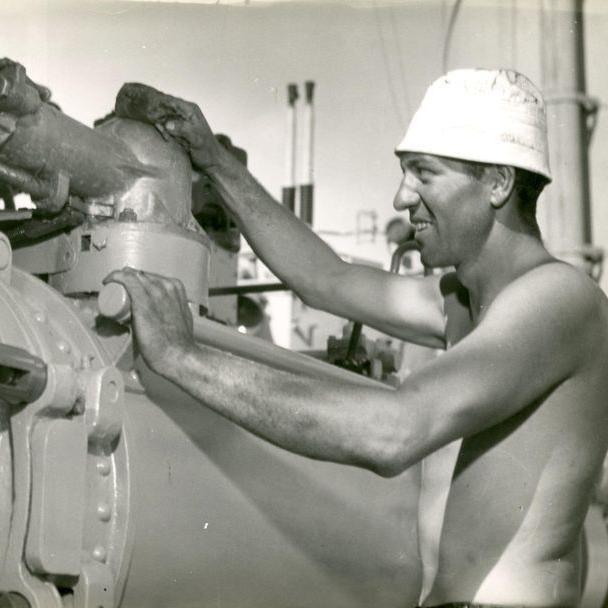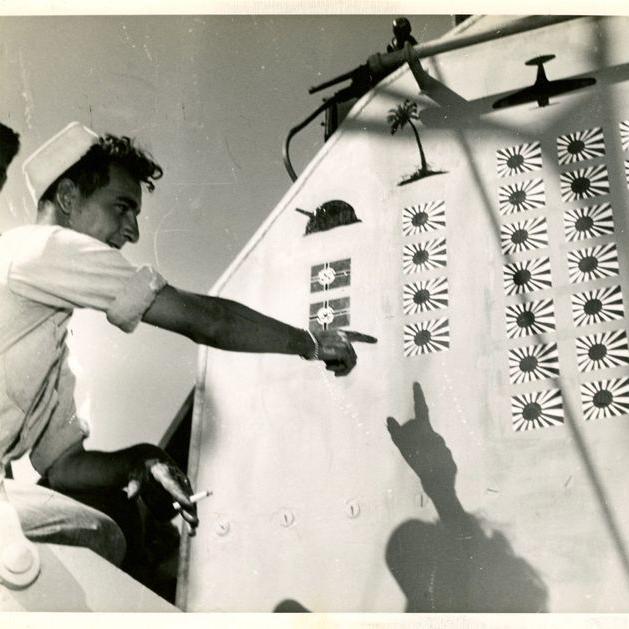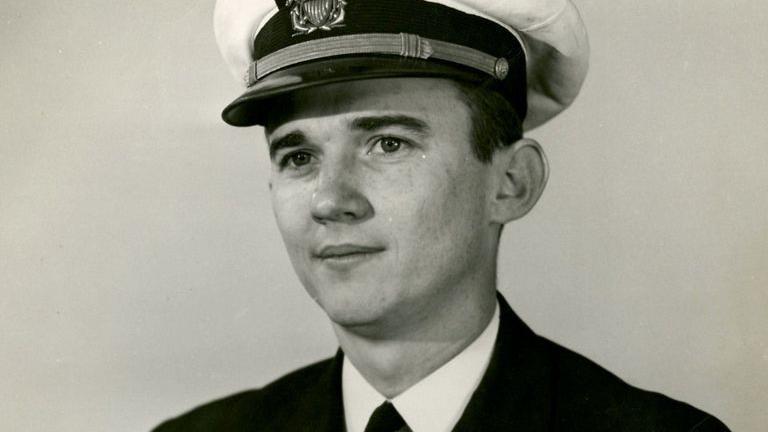
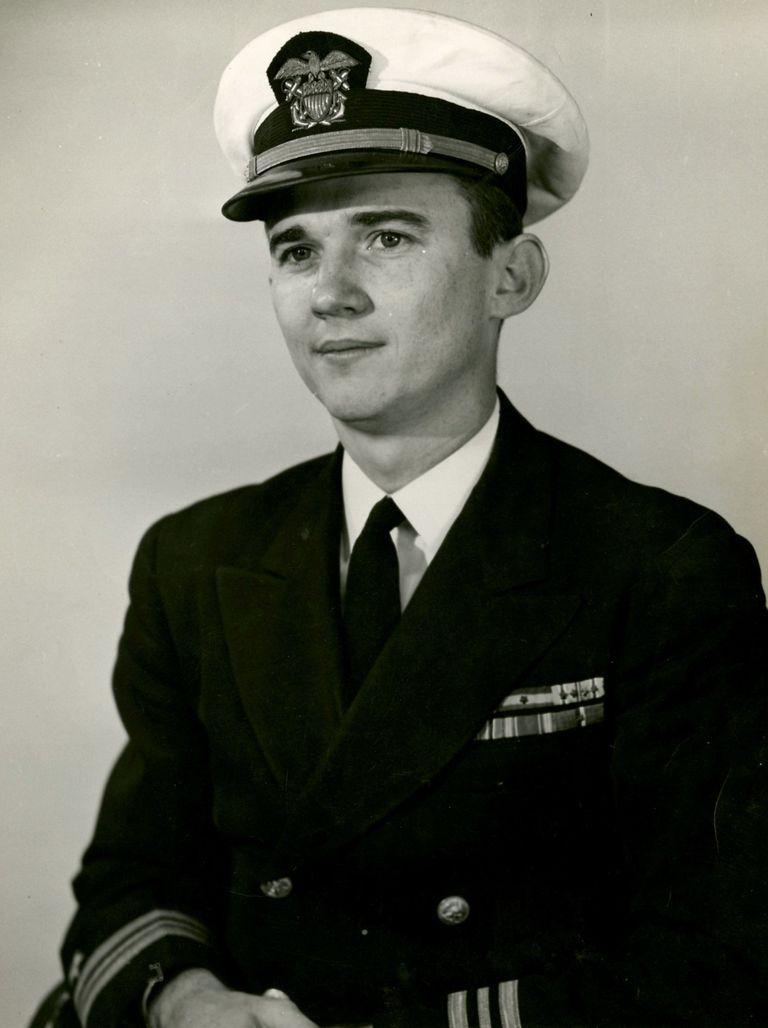
Frank Manson could have never expected that his Navy assignment would place him at the center of one of the most famous destroyer battles of World War II. On April 16, 1945, aboard the USS Laffey (DD-724), that’s exactly where the young officer found himself, asking a question that would become part of Naval history.
As waves of enemy aircraft descended on the destroyer during the Battle of Okinawa, Manson approached Captain Frederick Julian Becton with a grim concern. Would the crew have to abandon ship?
“Hell no Frank, I’ll never abandon ship as long as a gun will fire!” Becton’s answer became legendary.
For Manson, the moment was unforgettable. He would become one of the first people to tell the story of the “Ship That Would Not Die.”
Born in Drumwright, Oklahoma in 1920, Frank Albert Manson was a former high school teacher before eventually joining the Navy during the war. Commissioned in 1942, he was assigned to the USS Laffey in 1944 and became one of the ship’s original plank owners, serving aboard her through combat operations in both the Atlantic and Pacific theaters.
Months before the Laffey arrived off Okinawa, the Navy ordered every ship to appoint a Public Relations Officer and Captain Becton selected Manson for the role. Alongside Yeoman Second Class Herbert Rick, Manson began gathering crew biographies and hometown newspapers, hoping to share the ship’s accomplishments with the American public.
Manson had experience writing as a former college sports reporter and radio announcer, and he believed the American people would benefit from hearing stories from the front lines. But wartime censorship limited what he could report. Details about combat remained highly classified, forcing Manson and Rick to keep many of their accounts vague, and by the spring of 1945 there was very little time for writing.
The Laffey had joined the fight near Okinawa, where the crew spent much of their time at general quarters under constant threat of attack. Then came the assignment every sailor dreaded, radar picket duty. The Laffey was assigned to radar picket station one, nicknamed the “Graveyard Shift” because of the intense kamikaze activity in the area.
Over the next 80 minutes, the Laffey endured one of the most concentrated kamikaze attacks against a single ship during World War II. Kamikaze planes slammed into the destroyer, while bombs exploded around her. Gun mounts were destroyed, fires spread across the ship, flooding threatened to pull the stern beneath the waterline. Despite the devastation, the crew kept fighting.
During a brief lull in the attack, Manson toured some of the ship’s most heavily damaged areas. He saw sailors battling fires and working to stop flooding as the crippled destroyer struggled to survive. Returning to the bridge, he asked Captain Becton the question weighing on everyone’s mind.
Manson later recalled how certain the captain sounded when he gave a resounding no, while Becton himself remembered seeing the concern disappear from Manson’s face after hearing the surefooted answer.
Even after the attack ended, the crew still had to work to save the ship. As the battered and bruised Laffey was towed toward safety, Becton called Manson to the bridge to begin reconstructing the battle for the Navy’s official records. Together, the two men drafted a timeline of the attack while the ship was still reeling from the damage.
Within hours, Manson was sent aboard Admiral Turner’s flagship to brief Navy officials and reporters. On April 17, 1945, Manson delivered the first public account of the battle.
Without prepared remarks, he described the heroism of the crew and the now-famous exchange with Captain Becton. Air raid sirens interrupted the briefing as Okinawa itself remained under threat, with the war still raging around them.
Manson would say he knew this was his chance to tell the kind of story he had always hoped to share about the realities of life at sea. At the time, he had no way of knowing the Laffey would become one of the most celebrated destroyers of the war or be preserved at Patriots Point as a historic relic.
What he did know was that at the center of his firsthand account lay the determination of a crew that refused to quit.
Because of his reporting, the story of the USS Laffey quickly spread through newspapers and radio broadcasts across the country. Through Frank Manson, Americans learned not only about the Battle of Okinawa and the brutal war at sea, but about the sailors who fought against all odds and the legacy of the WWII ship that simply would not die.
From the Collection of Lt. Frank Manson, Communications Officer, USS Laffey (DD-724) 1944-1945