Service, Creativity, and Humor: A look at the career of Navy Veteran and Patriots Points’ Graphics Manager, Jim Vickers
From the deck of USS Arthur W. Radford, diving below the water at the Charleston Naval Shipyard, or creating memorable visuals around Patriots Point Naval & Maritime Museum, Jim Vickers’s career has been one of service, creativity, and humor.
Once a Veteran, Always a Veteran
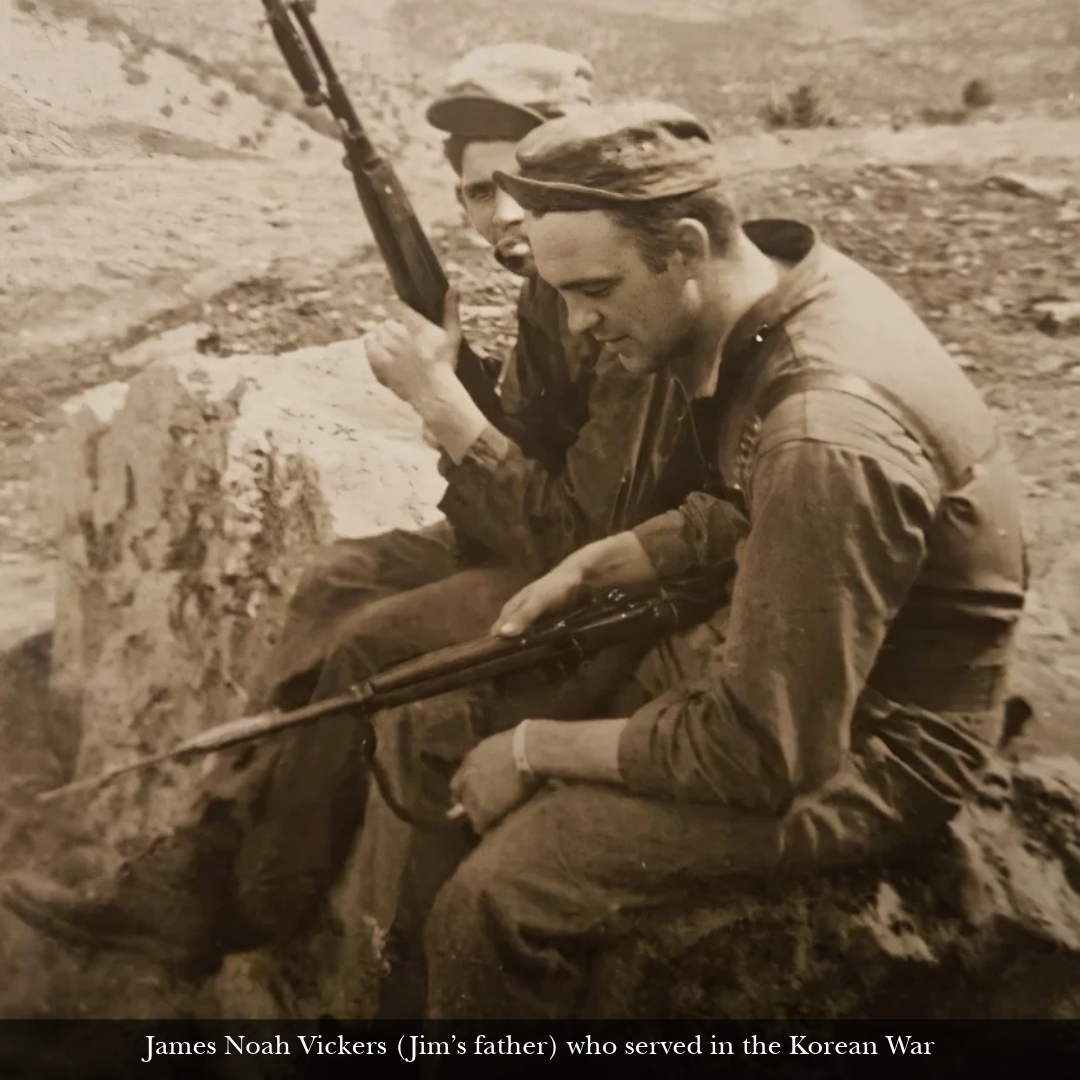
Originally from East St. Louis, Illinois, Jim Vickers never thought that he would join the military growing up, even after watching his father, James Noah Vickers, serve in the Korean War as a radioman on an aircraft.
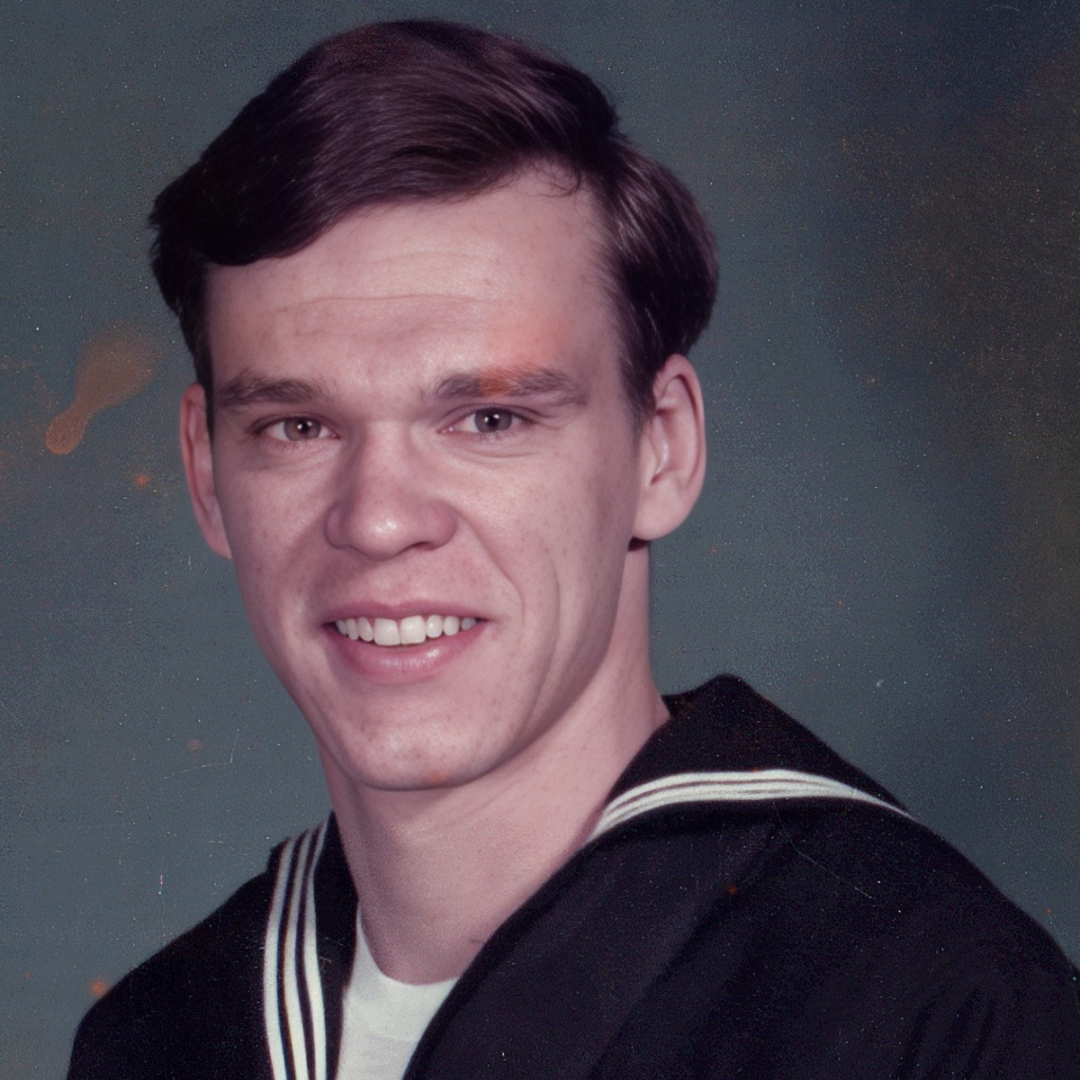
When the time came for Jim to find a job, it was the 70s, and the job market wasn’t great. In the fall of 1977, he decided to enlist in the United States Navy, and attended Hull Maintenance Technician (HT) “A” School and was stationed aboard USS Arthur W. Radford (DD-968). Once assigned to the destroyer, Jim would travel all around the world, port in different countries, and meet hundreds of fellow sailors.
One of Jim’s most memorable times at sea was when his ship steamed through a storm in the North Atlantic, not once, but twice. The waves were between 40 and 50 feet, with 70 knot winds, which now falls into the strength of a Category 1 hurricane. Jim recounts that they were the only ship at sea and his fellow sailors and him had to learn to stay in their racks, eat the food they had, and wait for the storm to pass.
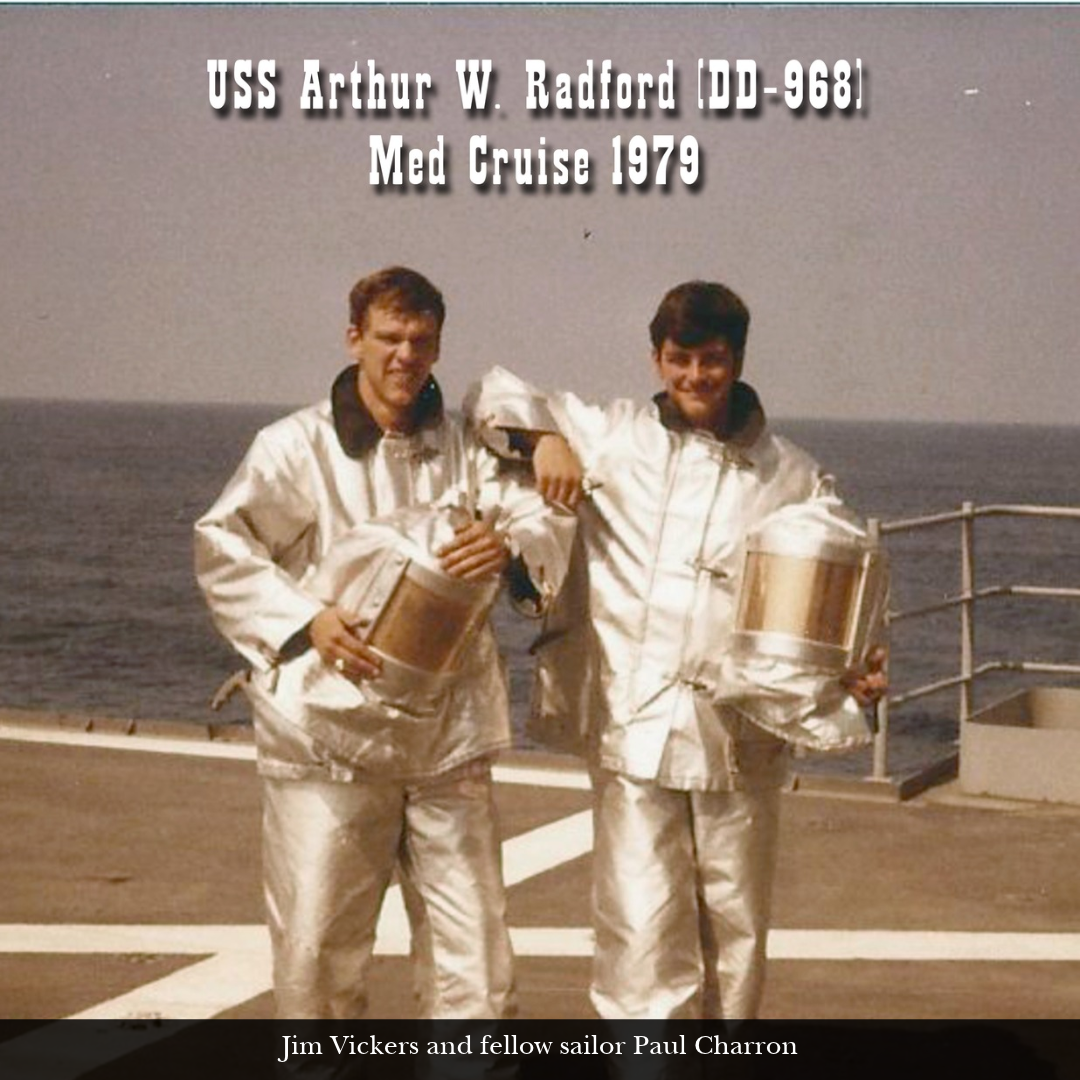
After two years at sea, the opportunity came for Jim to go back to training, but this time to become a diver for the Navy. Jim attended the U.S. Navy’s Second-Class Deep-Sea Diving School in Little Creek, Virginia.
Jim had a simple answer for why he decided to become a diver, “I thought it would be cool.”
After completing training, Jim was stationed in Charleston aboard USS Frank Cable (AS-40). Jim recalls an important lesson he learned from his Master Diver, after a particularly challenging exercise. “Don’t expect a pat on the back, I expect you to do a great job every time.” Excuses were unacceptable, even when the water was extremely cold, he was expected to dive and get the job done.
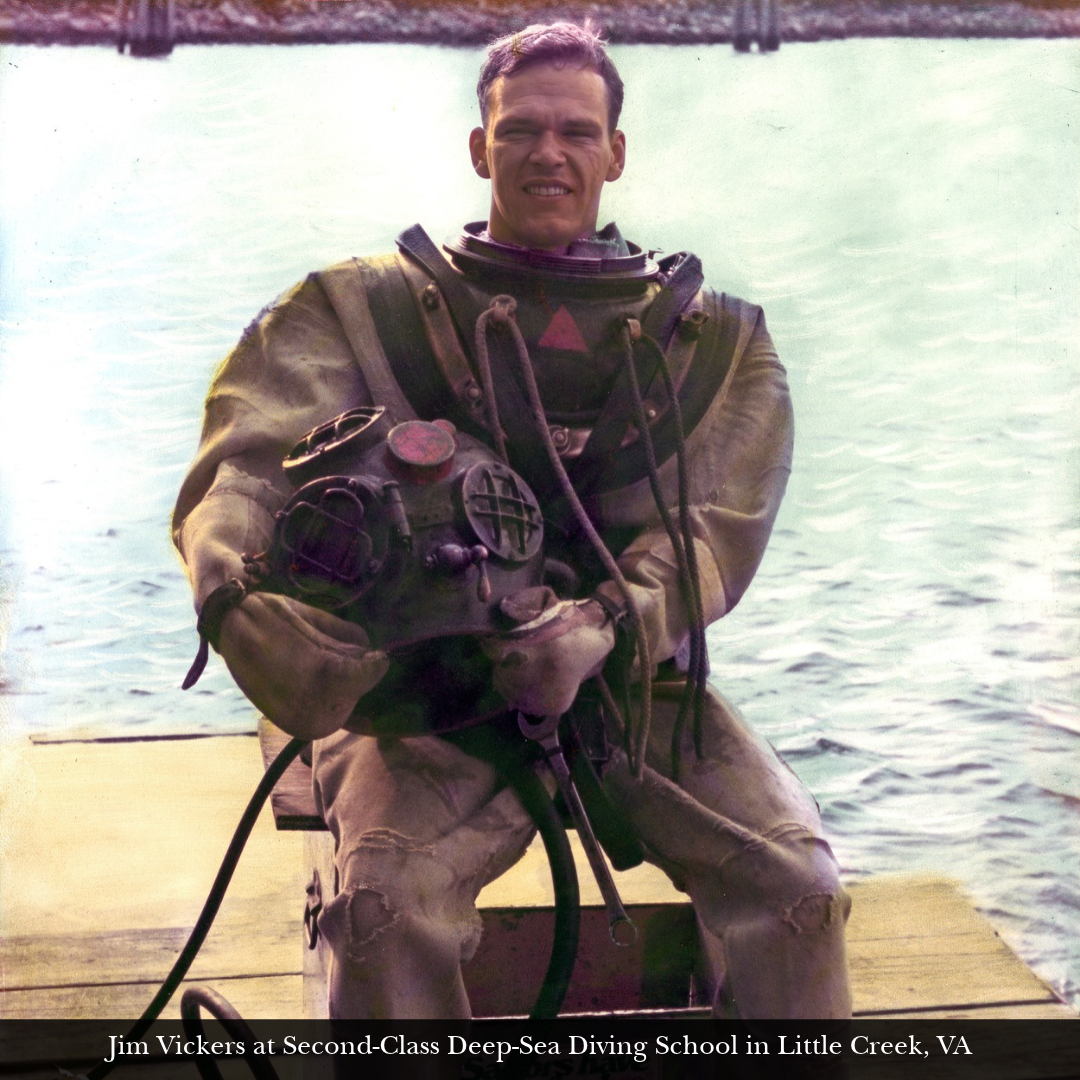
During his time at the dive locker on the Frank Cable, Jim would dive on naval submarines and perform inspections, propeller changes, paint, weld, take underwater photographs and make repairs as needed to keep the submarines fleet ready. He also had the opportunity to work with the U.S. Navy underwater photography team filming a ship underway as it passed over the diving team. Jim shares, “You can’t imagine how fast a ship moves until you see it flying 30 feet over your head and then you start swimming as fast as you can towards the ship to capture photos of the running gear.” This introduced him to a passion that would follow him for the rest of his life, photography.
In reference to himself, Jim doesn’t consider himself to be a photographer, “I’m not a photographer, I just like taking pictures, and I have taken a lot over the years.”
Jim looks back fondly at his time in service, for all that it taught him and the connection that it gave him with other Veterans. He thinks that everyone should serve at some point in their lives because it gives you confidence, a sense of service, and you learn how to work as a part of a team.
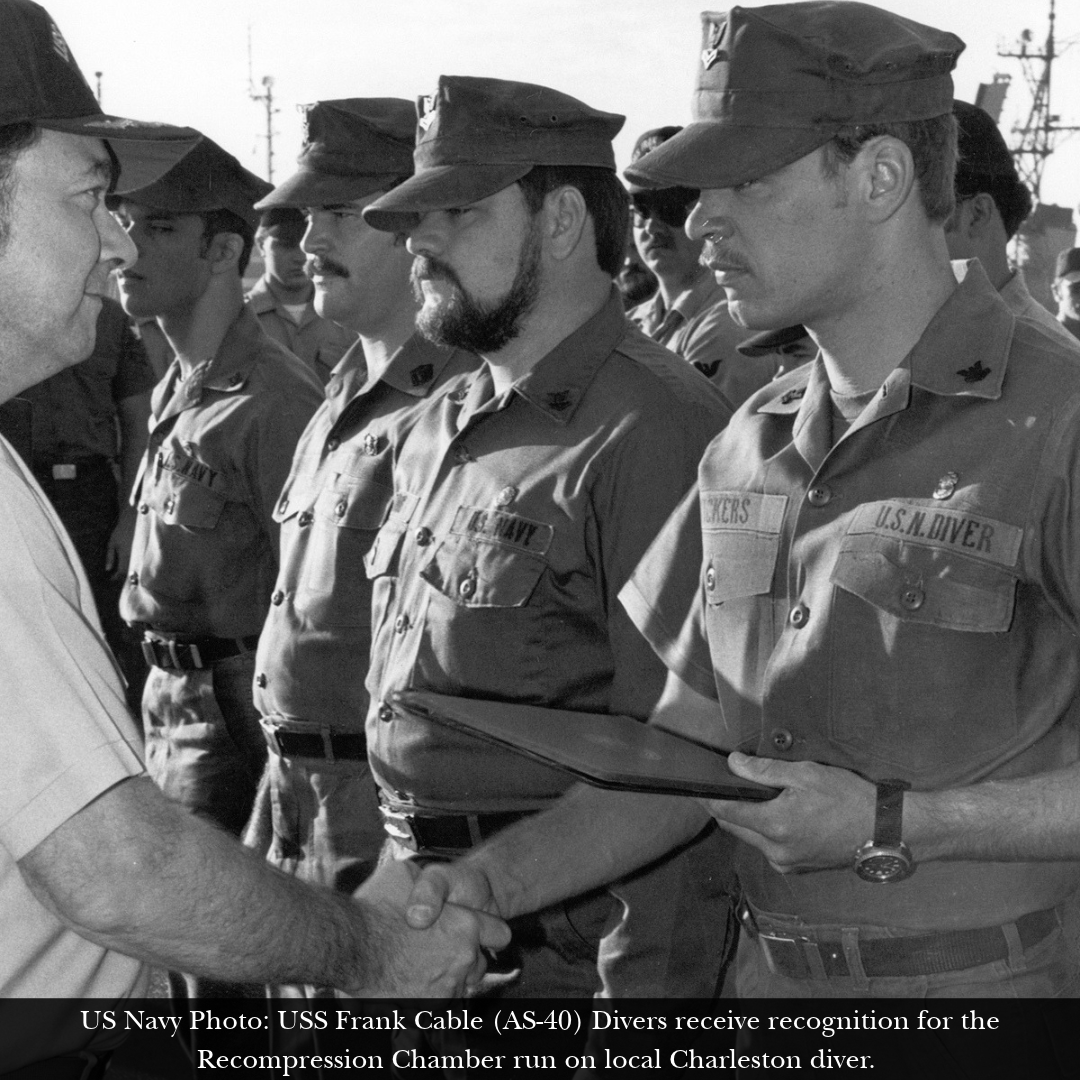
“No matter what you do in life, you’ll always be a Veteran.” Jim continues, “The bond between Veterans is super important, and it’s been fun to talk to and connect with other vets through the years.”
Life after the Navy
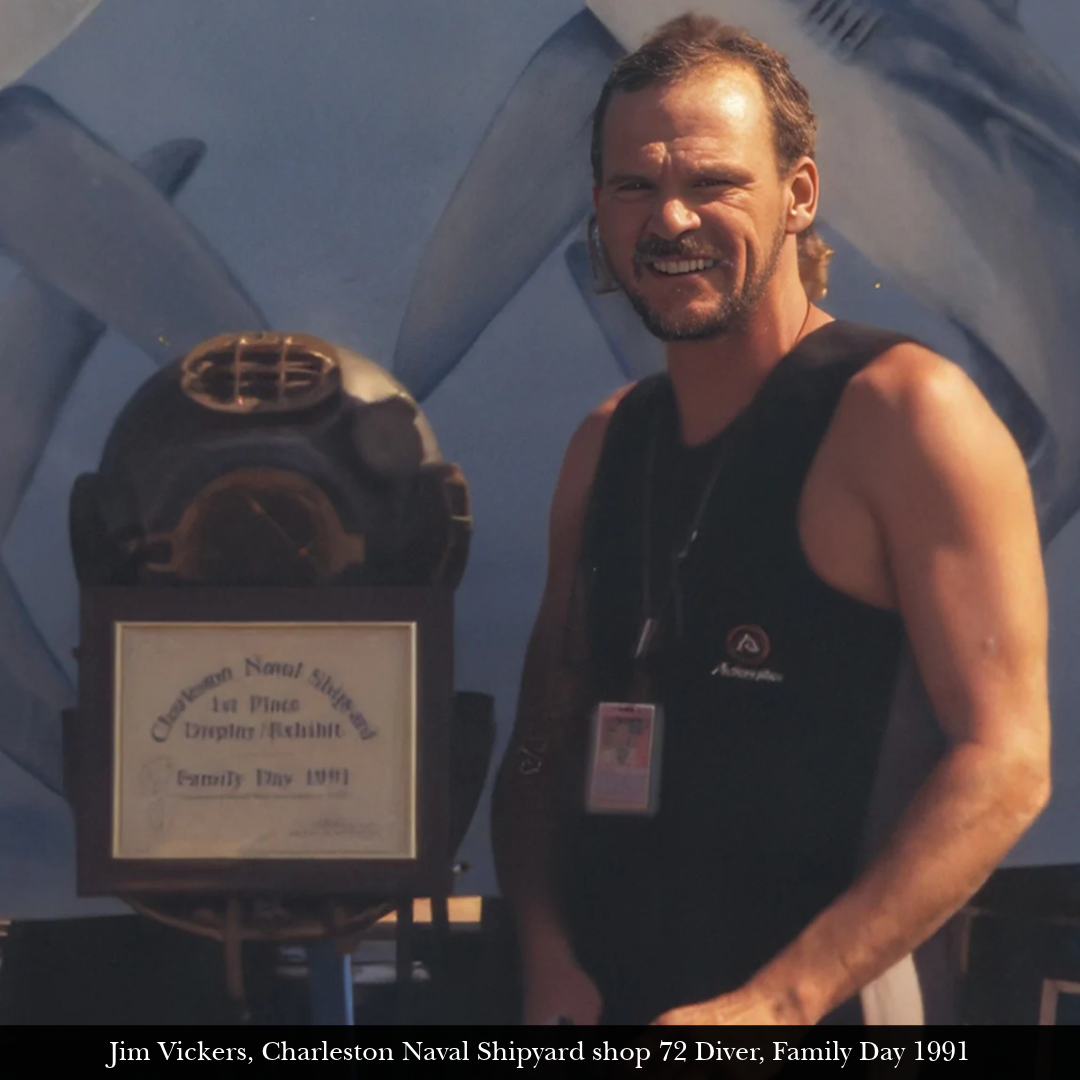
Jim left the Navy in spring 1982, staying in Charleston, South Carolina where he found a job as a diver at the Charleston Naval Shipyard. For 14 years Jim worked in the Shop 72 Diving Locker where he performed many of the same duties that he did in the Navy, while also traveling to other countries for various diving operations.
The shipyard had its challenges, but Jim had the opportunity to dive and learn from seasoned diving professionals. He remembers assignments such as diving on a submarine to do an inspection inside the torpedo tube or squeezing into the mud tank to inspect or clear a fouled anchor. Places on these ships and submarines were very tight, and, in most cases, the team worked with very little visibility. Jim credits his fellow divers who taught him how to get the job done no matter where, or what it was.
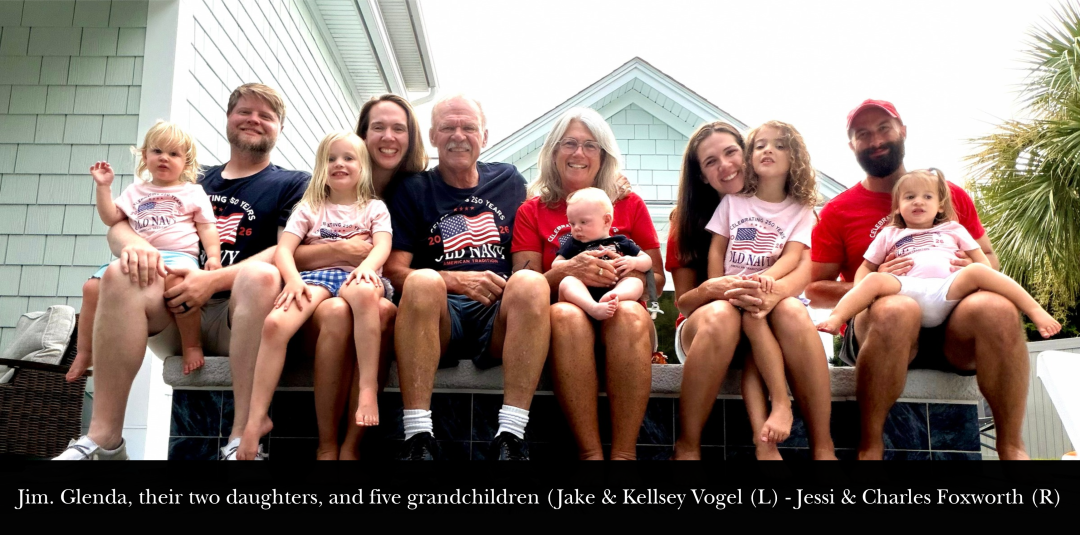
Life forever changed for Jim when in 1987 he met his now wife, Glenda, after realizing that they only lived half a mile away from each other. The two were married in 1990 and welcomed two daughters (Kellsey and Jessi) in the following years.
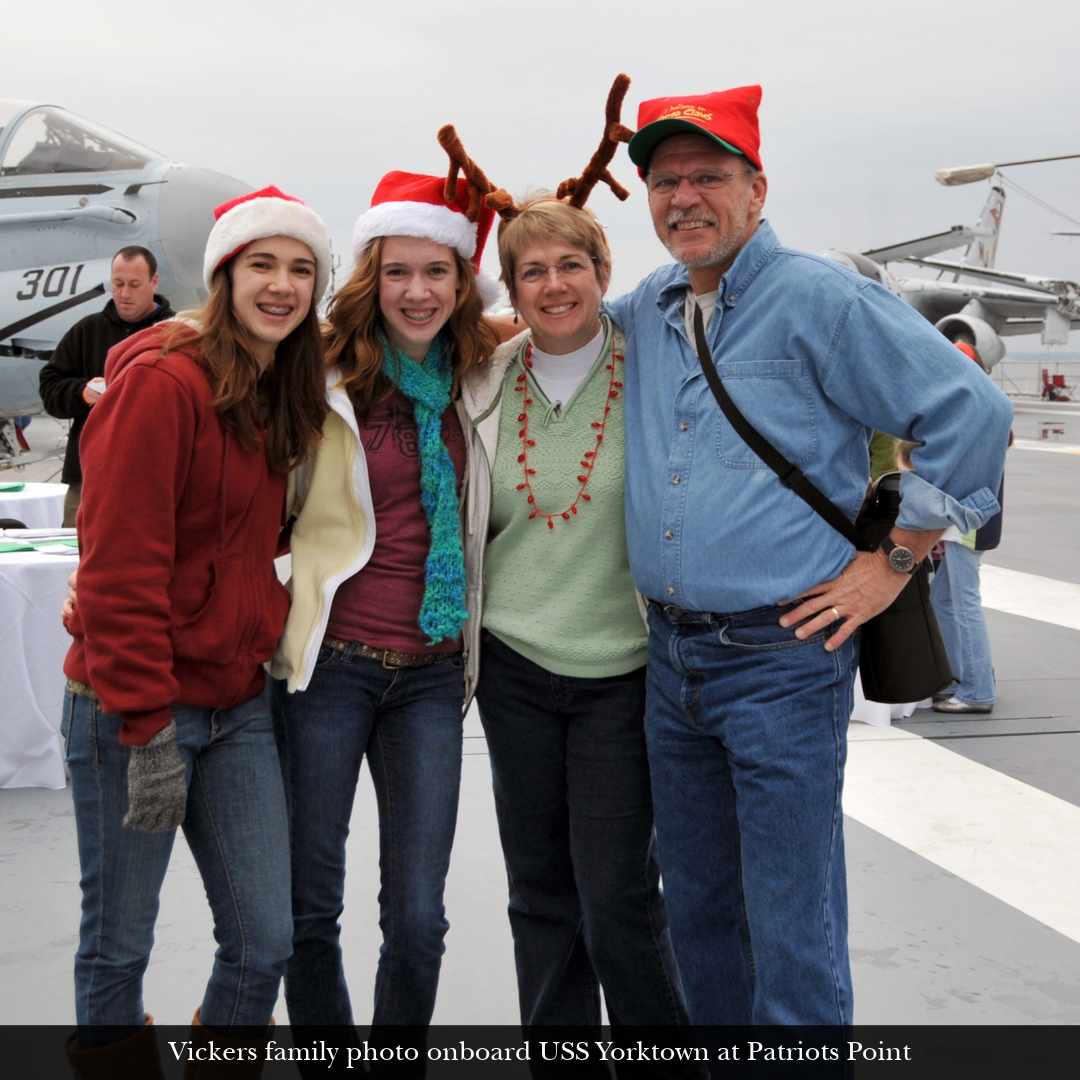
Then in 1996, the Naval Shipyard was closing, and once again Jim found himself at a crossroads with what his next steps would be.
On his last day at the shipyard, Jim and several of his fellow divers were the last to leave, when someone mentioned they were headed to the Yorktown to help move equipment and get lunch. At first, Jim was hesitant, before someone asked him, “Well, what else are you doing right now?” Jim reluctantly joined, not knowing that this meeting would be the start of a new chapter.
After arriving at Patriots Point, Jim spoke with the current graphics manager at the museum, who was very interested in Jim, and that he was attending classes at Trident Tech working towards a degree in Engineering Design Graphics. And an interview was set up a month later.
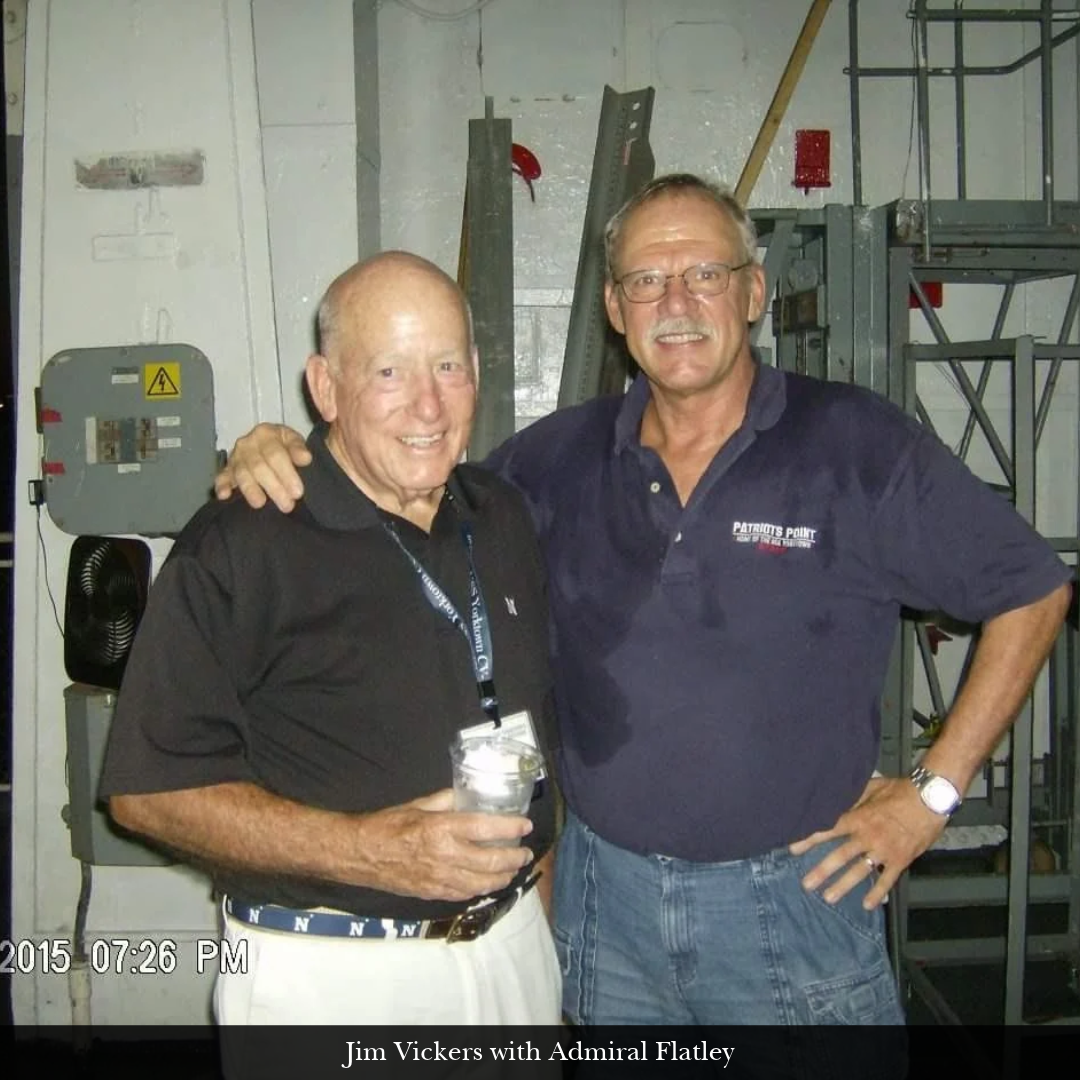
Jim recalls his interview with then Executive Director, Rear Admiral James H. Flatley III. The main question Adm. Flatley asked was, “Do you want to work here?”
Jim, who was at the time out a job and working to support his family, of course answered yes. What stood out to Jim was that Adm. Flatley cared less about the technical aspects of the role, but more so about the kind of people he wanted working at the museum. “I want people who want to work here.” He stated. Starting in 1996, Jim was one of those people.
A New Era at Patriots Point
Patriots Point was a very different place in 1996, as was Charleston. Moving into his new role, Jim found that while the museum was preserving the history of the ships’ time in service, no one was documenting the history of the museum. He worked to compile all the photos he could find so that in the future, they could be shared.
Some of his favorite photos that he found were from USS Yorktown Association Reunions, American entertainer Ann-Margret’s USO concert on the Yorktown, basketball tournaments on the flight deck, Entertainer Bob Hope’s 1989 visit to Patriots Point, and more.
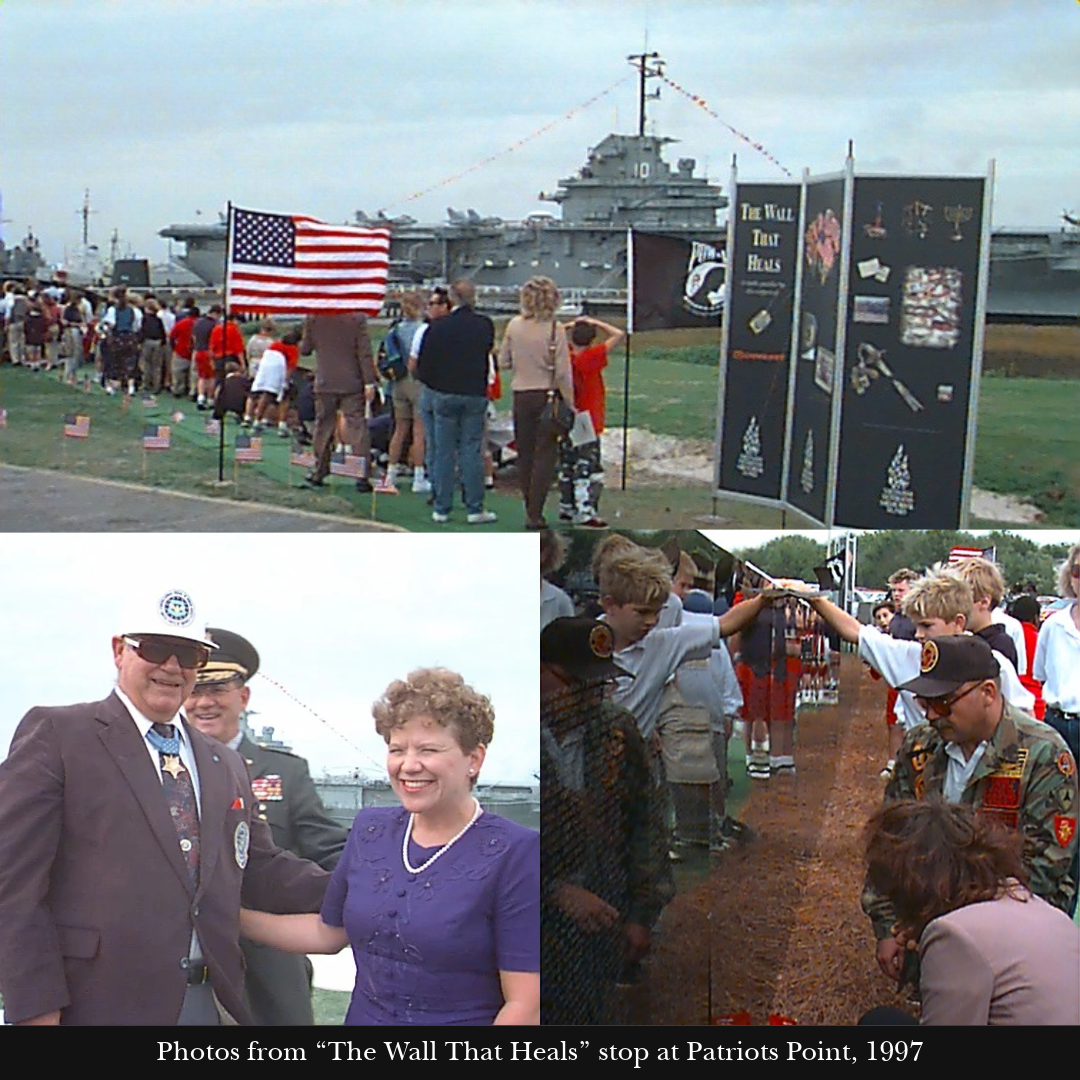
For one of his first assignments, Jim was tasked with photographing and illustrating “The Wall That Heals” when the mobile replica of the Vietnam Veterans Memorial made a stop at Patriots Point. The photos, taken on a 600x400 pixel camera, capture the stoicism of the memorial, and what looking at the names of more than 58,000 service members who made the ultimate sacrifice or remain unaccounted for, felt like.
This illustration of the memorial is now catalogued as a part of the museum’s collections after it was donated back to the museum, by Adm. Flatley himself.
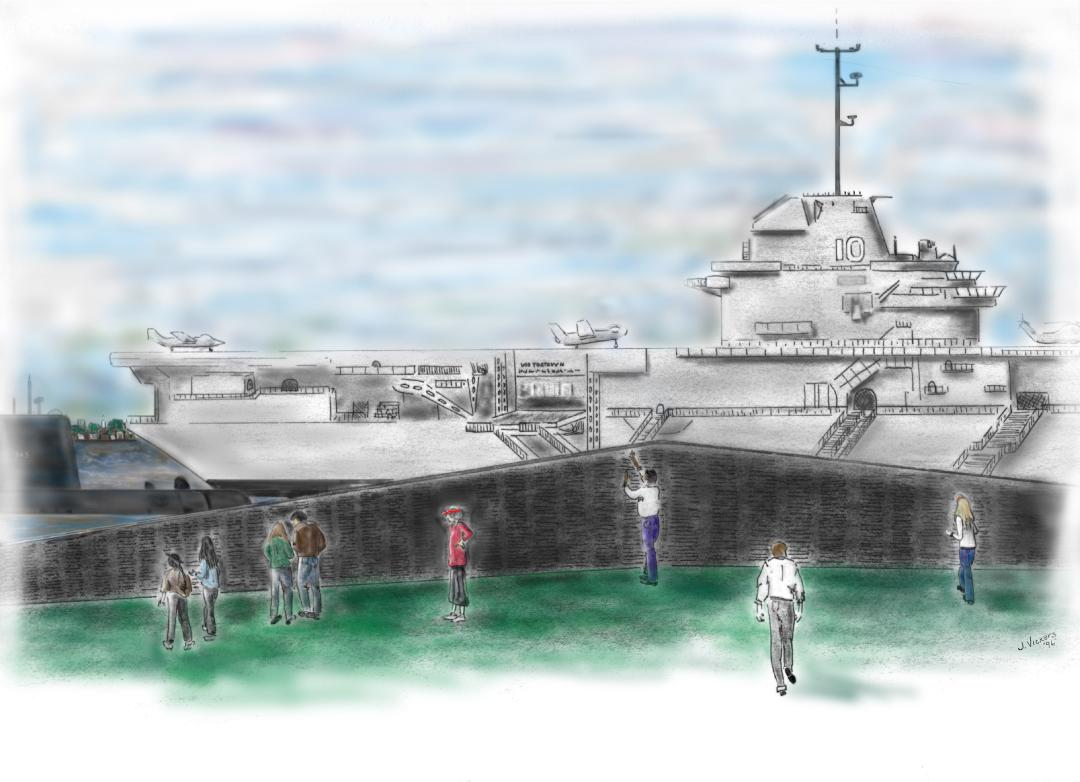
Pencil sketch of Vietnam Memorial Wall in front of USS YORKTOWN at Patriots Point illustrated by Jim Vickers.
With the museum constantly changing, and the efforts of the maintenance team growing to preserve the museum ships, Jim played a role in documenting renovations, restorations, any damage made, so that moving forward the rest of the team could look back and see what had already been done.
Jim emphasizes that his job is “to make things look pretty,” and that “the real work of preserving this place is with the maintenance team.”
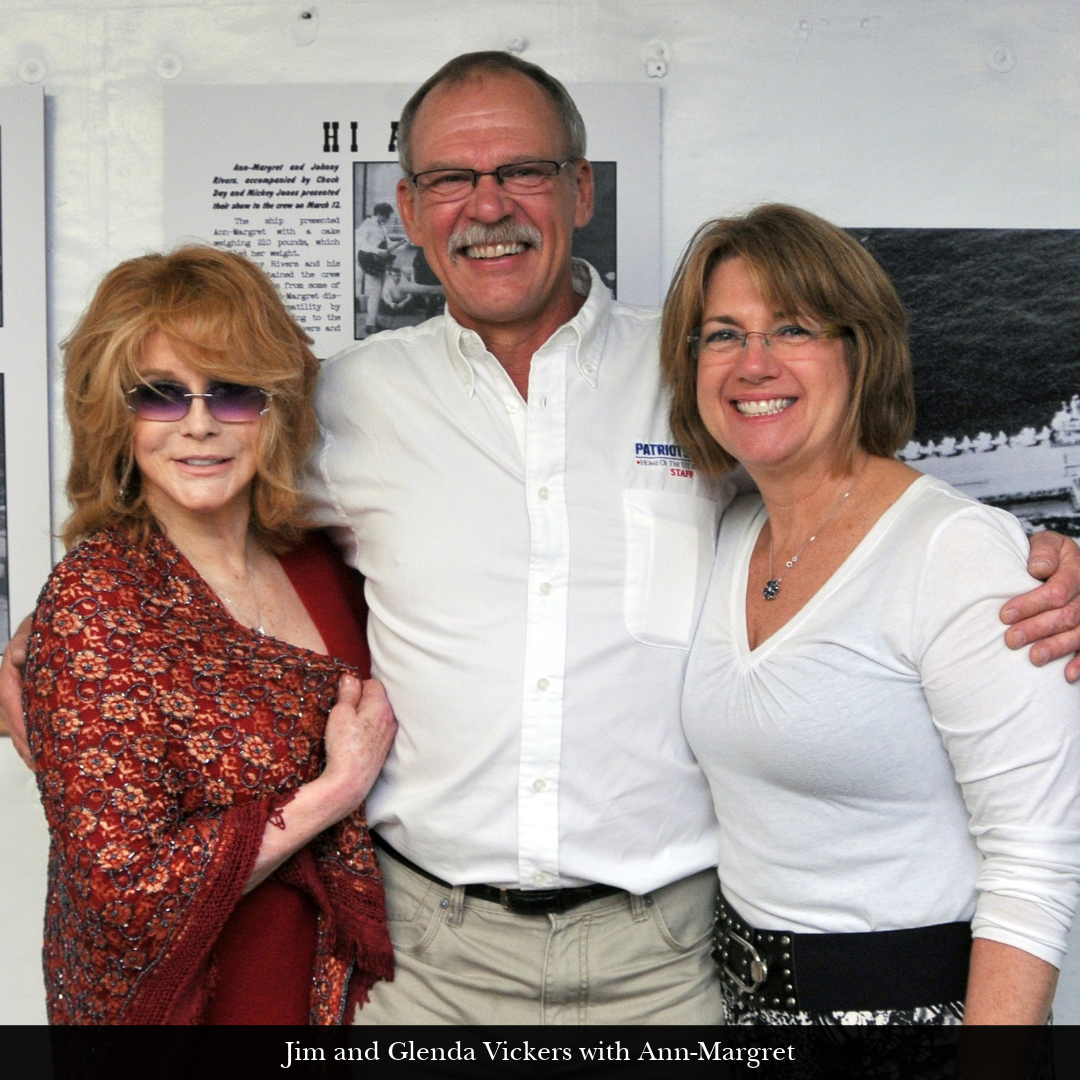
In another full circle moment, Jim had the opportunity to speak with and photograph Ann-Margret when she returned to “The Fighting Lady” in 2012. In speaking with the entertainer, she shared the reason she had been, and remained so committed to supporting troops, that it was something her mother was passionate about, stating she knew this would have made her mother proud.
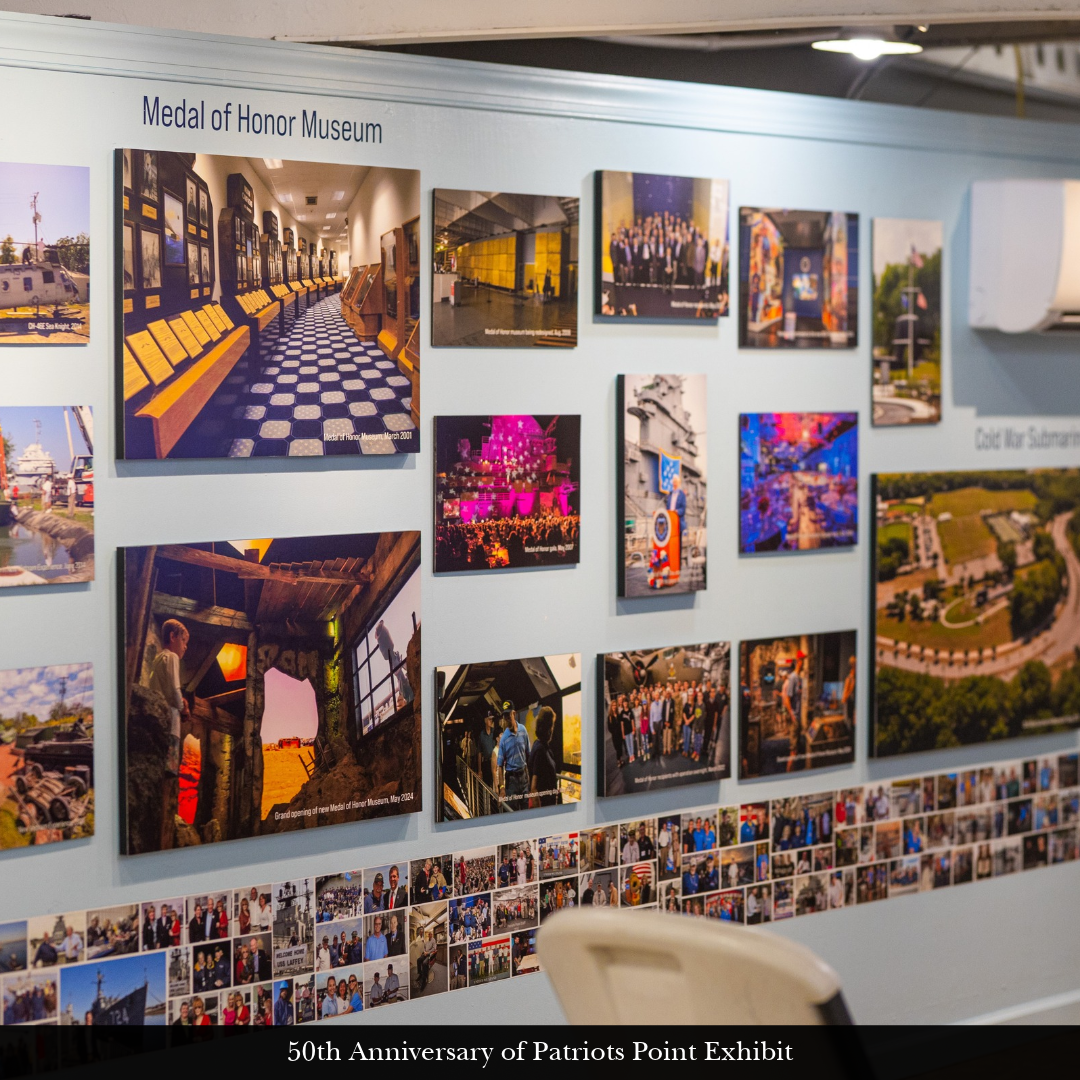
A large portion of the Graphics Manager’s role is to help the visuals of new exhibits, Jim’s favorite part of the role. His favorite exhibit that he had the chance to work on is the 50th Anniversary of Patriots Point exhibit, on display now at the museum. He was able to go through all the photos he had found and taken during the museum’s history, to create a timeline of the past 50 years.
Going through these photos was nostalgic for Jim. Not just because of the history and passing of time but being able to go through and see photos of past coworkers. He worked hard to make sure that every era of the museum was represented, and as someone who has worked under seven different executive directors, he would know best how to do so.
New Beginnings
After an incredible career, Jim Vickers will be retiring from Patriots Point Naval & Maritime Museum on December 4, 2026.
When asked what he will miss the most, Jim simply said, “Coming to work every day, doing the work I enjoy, the fun equipment I get to use, and the people I get to work with.”
“Patriots Point is a good place to work, always fun, and always changing.”
The work that he has done has visually transformed the museum and transformed how the history of the museum is documented.
When Jim was first asked to share his service and career, he said, “I’m not sure I will be that riveting. But sure.”
After reading through his career, time in the service, diving at the shipyard, creating endless graphics, and taking thousands of photos documenting the history of Patriots Point, you can judge that for yourself.
Thank you, Jim. Patriots Point and all those onboard, past and present, will miss you.