
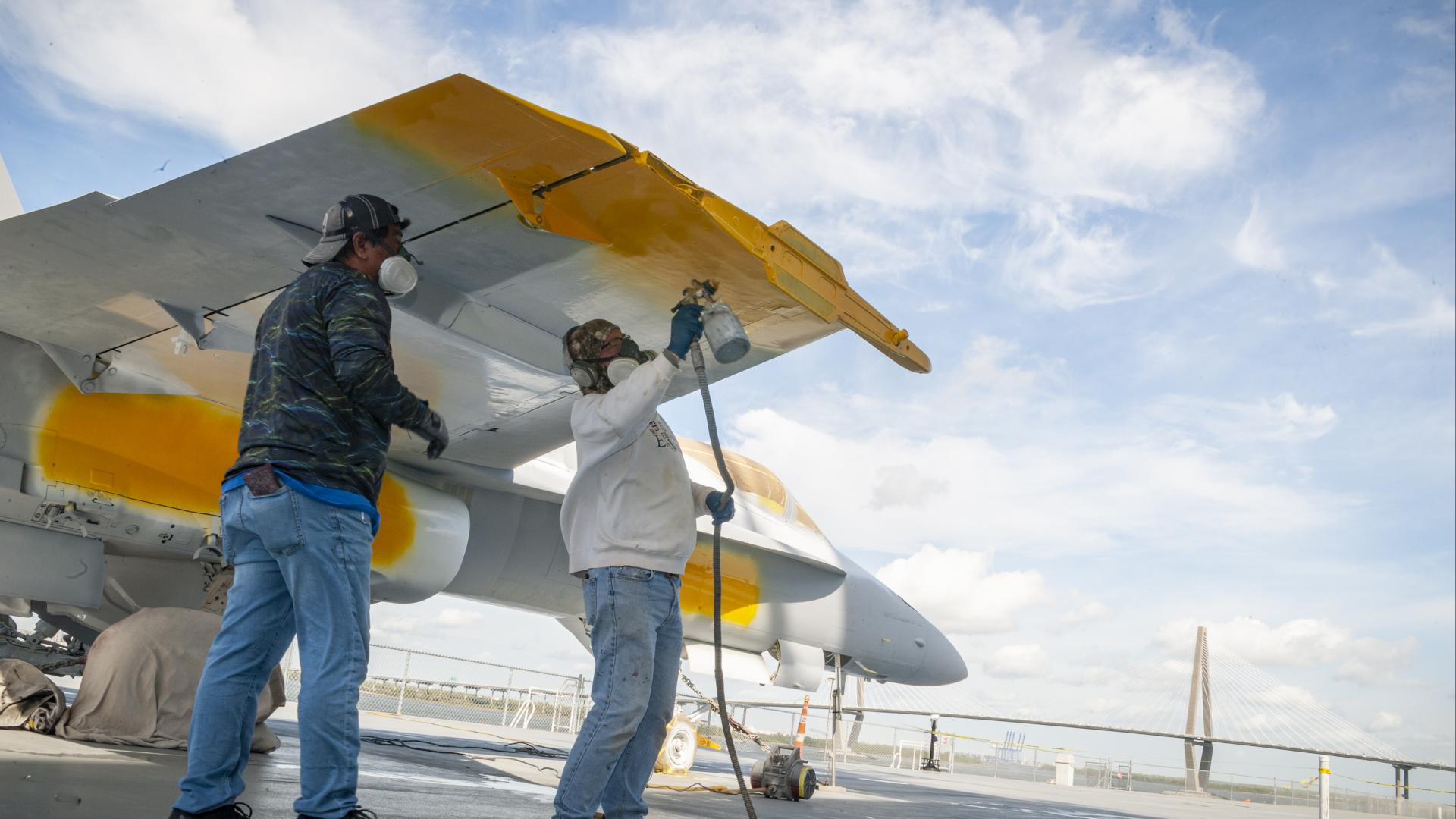

How do you maintain an aircraft carrier decades after her final deployment? At Patriots Point, the answer involves far more than a fresh coat of paint. It takes a team whose work ranges from restoring historic compartments, protecting the ship from the saltwater surrounding her, and any other elements she may encounter.
During the “Fighting Lady’s” years of service, somewhere between 200-300 sailors of the over 3,000-man crew would be tasked with keeping the nearly 1 million square feet on the ship maintained. Now, serving as the centerpiece of Patriots Point Naval & Maritime Museum, USS Yorktown (CV-10) has a crew of 20-26 employees who focus on maintenance and preservation, while also maintaining USS Laffey (DD-724), the Congressional Medal of Honor Museum, Vietnam Experience and more, for generations to come.
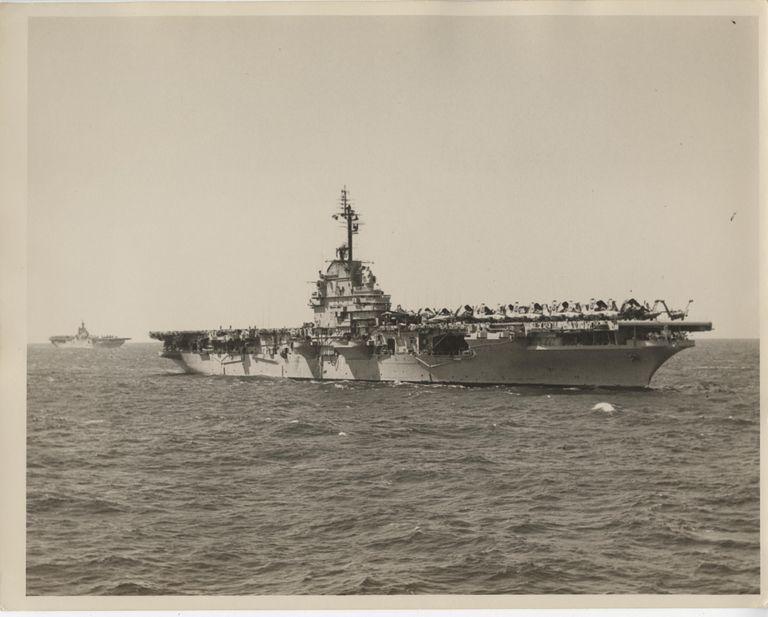
After her decommissioning in 1970, USS Yorktown spent five years in “mothballs,” a reserve status in which inactive ships are sealed and protected against moisture and rust for potential future use. In 1975, when USS Yorktown made her way to Charleston Harbor, there was a lot of maintenance and restoration required before the museum could open to the public. Spaces that once housed Sailors protecting our seas had to transform into spaces that could welcome visitors to the ship and preserve her and her crew’s legacy.
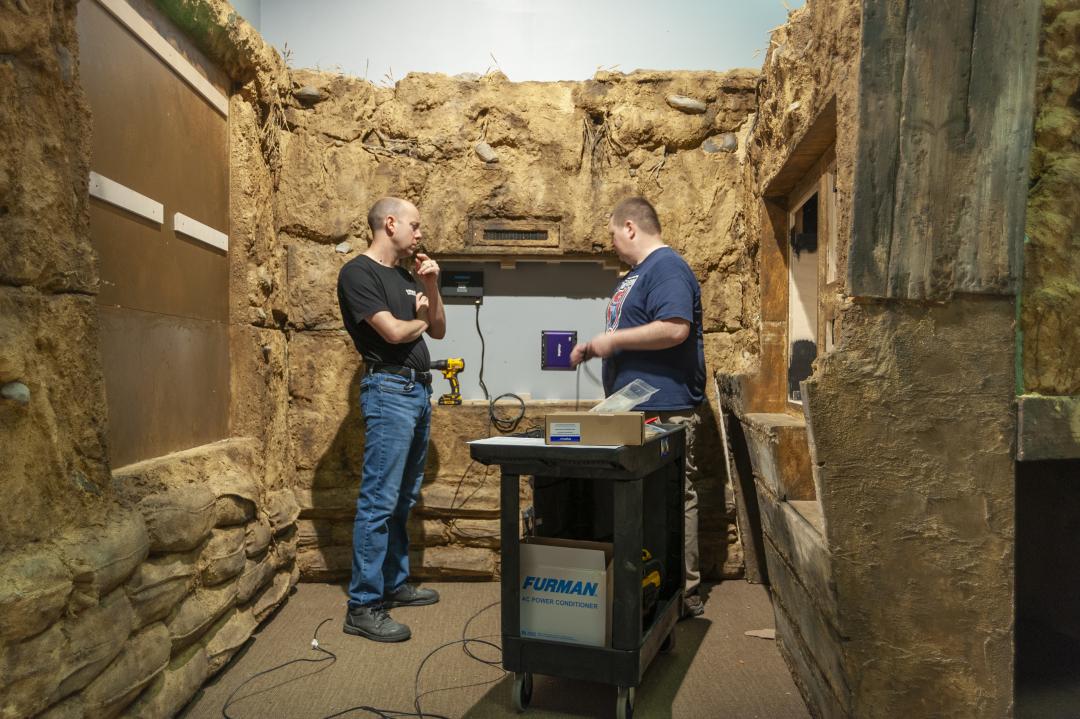
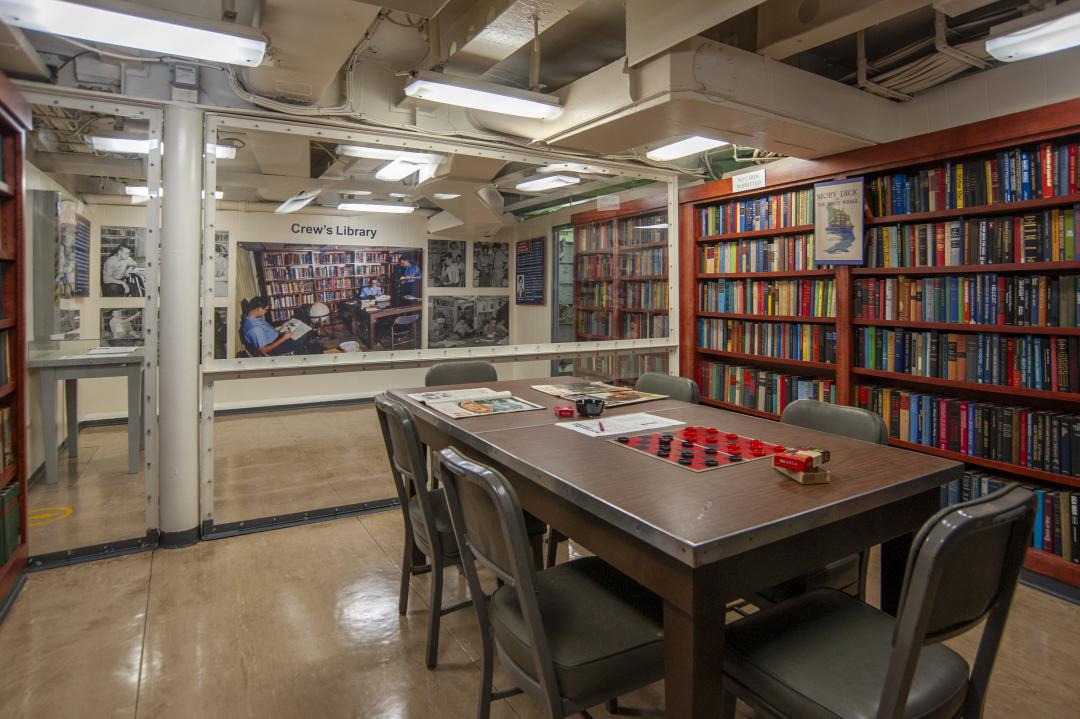
Some projects help visitors see Yorktown as her crew once knew her, while others support everyday needs of a working museum. Today, our team works every day to reclaim different parts of the ship and turn them into spaces the public can explore. The team will find spaces along existing tour routes, or a space that is easy to access to the public and convert them into exhibits, which is how the ship’s library exhibit came to be. Images and remnants of the original library helped to keep the design as accurate as possible to the original and helped our team decide where this exhibit needed to be on the ship. Now, visitors can see what the library looked like on Yorktown during her service. Our team makes practical changes to support the museum’s daily operations. For example, Yorktown’s original special weapons elevator now serves as a freight elevator, carrying everything from maintenance equipment and event furnishings to workout equipment for our popular Sweat on the Ship series, up to the flight deck.
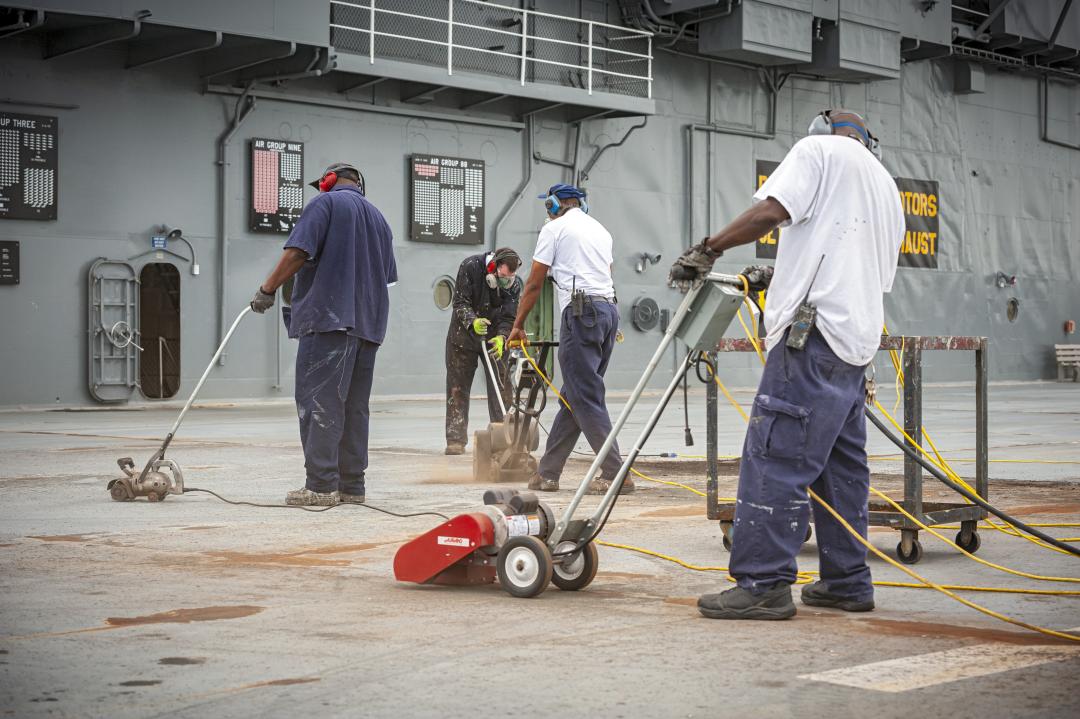
Speaking of the flight deck, this has undergone several restoration projects to stay one of the best views of Charleston Harbor. The original flight deck built during World War II was created out of Douglas Fir Wood, a common practice in this era because wood was much easier to repair in battle vs. steel or metal. In the 2000s, the flight deck was partially resurfaced with a steel deck and a protective coating, to ensure that she was protected from any elements she may face out on the water.
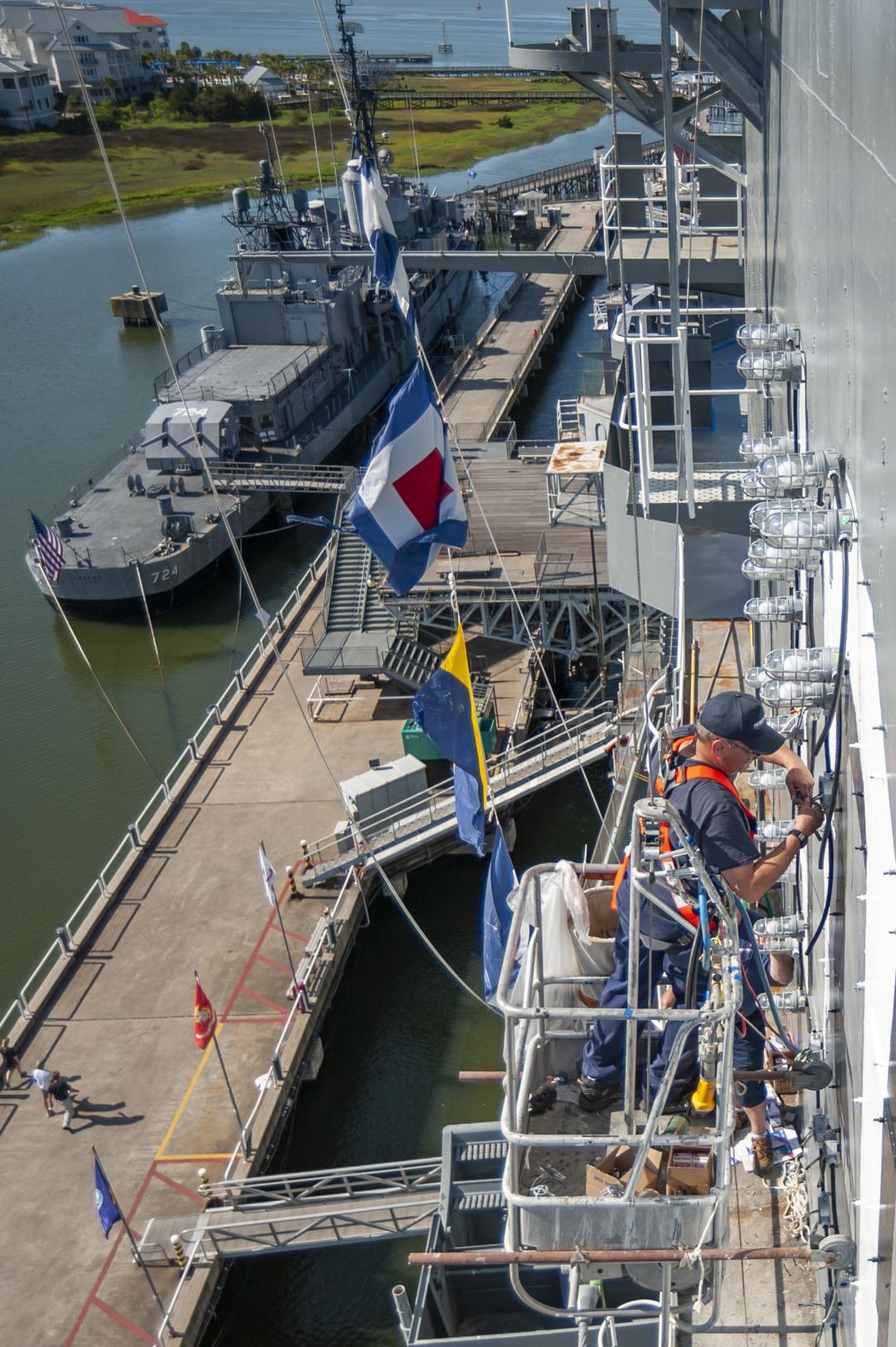
A large part of our maintenance team focuses on keeping the paint inside and outside the ship in good condition. One of the most challenging projects the team took on was repainting the outside of the island on USS Yorktown. Painting the island presented a unique challenge, requiring careful planning to reach elevated areas while protecting the flight deck below. Paints and coatings used on the ships’ exteriors also add another challenge as they must meet environmental guidelines and requirements. The exterior of Yorktown is covered in a water born epoxy paint to protect both the ship and the environment around it, while USS Laffey (DD-724) uses the Navy’s latest silicon epoxy paint to maintain her hull. This paint also helps to protect the hull from corrosion, in step with the ICCP system.
The steel atoms of a ship’s hull hold electrons, and in saltwater, corrosion can pull the electrons away from steel, creating rust and damage to the steel. An Impressed Current Cathodic Protection (ICCP) system is used to prevent corrosion by applying an external electrical current. This process counters the natural electrochemical reactions that can cause rust and corrosion. It’s why we tell boaters not to touch the hull, because if they do, they will feel the electrical current from the ICCP system!
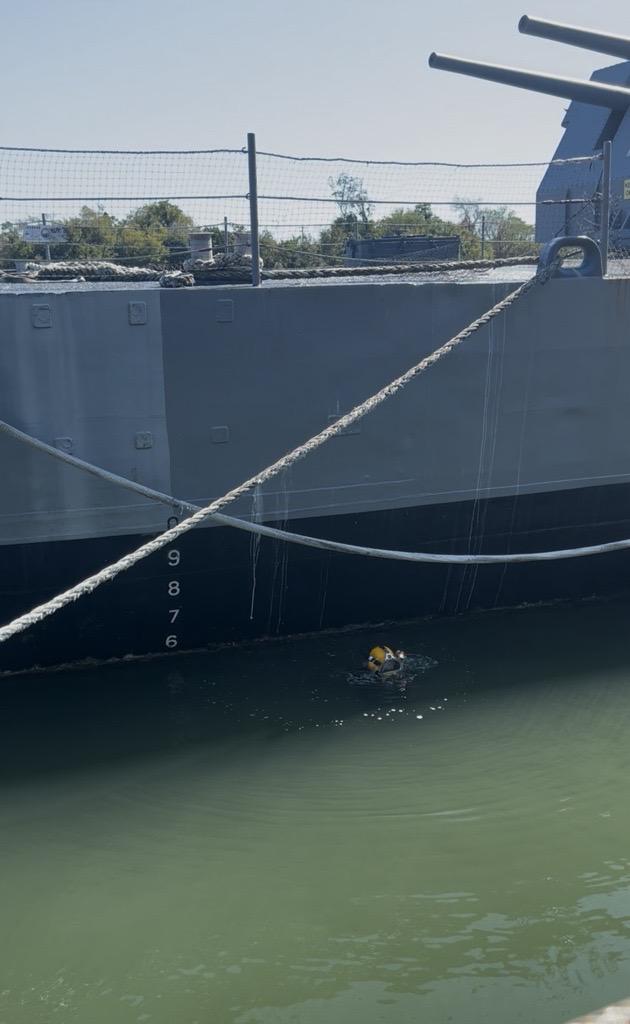
Protecting the hull of both Yorktown and Laffey is a lengthy process, and different for each ship. Yorktown is permanently moored in 30 feet of pluff mud, so all her maintenance and inspections must be done in place. However, “The Ship That Would Not Die,” can go into dry dock, a process where the ship leaves the museum, is inspected out of the water to make sure there are no hull maintenance needs, and brought back to the museum. Our maintenance team has been working hard preparing Laffey to go into dry dock, making sure the inside and outside of the ship are ready. Hull inspections have taken place, where a team will use scuba diving equipment to go under water and inspect the hull prior to dry docking.
From aircraft, to ships, to the Vietnam Experience, Medal of Honor Museum, and everything in between, our maintenance team goes above and beyond to continue bringing Patriots Point Naval & Maritime Museum to life for the community to experience for many years to come.