
From Yorktown to America 250: How the USS Yorktown's Name Connects Us to the Nation's Founding
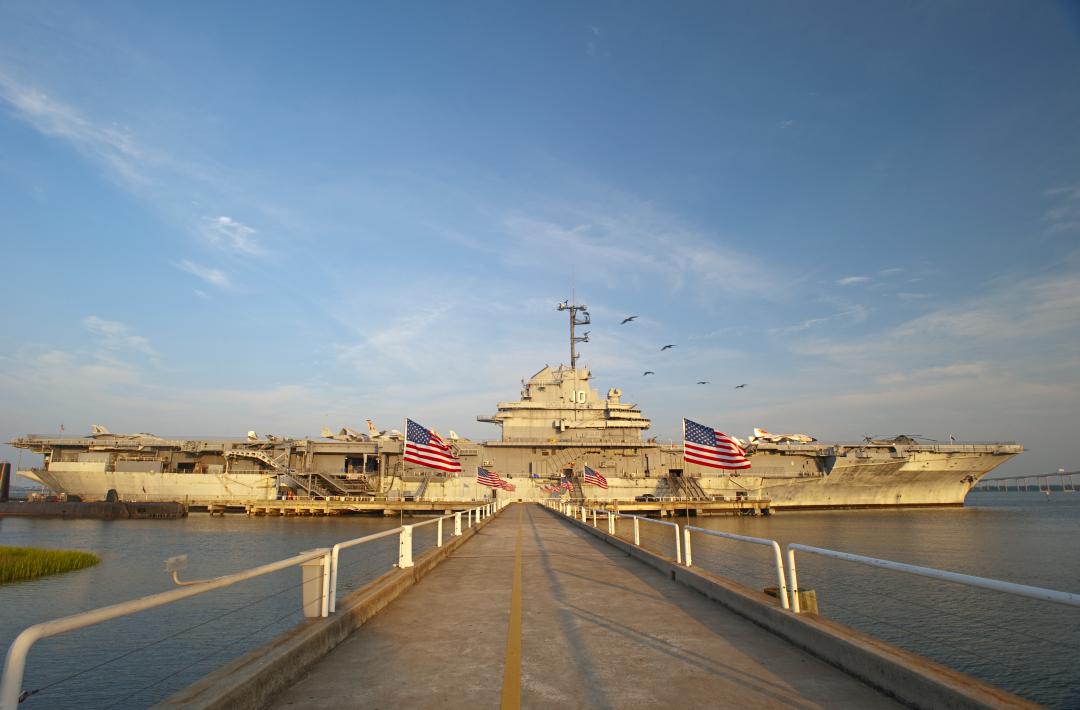
As America celebrates its 250th anniversary, Patriots Point’s USS Yorktown (CV-10) offers a unique connection to the nation’s founding story. That connection begins with her name.
The USS Yorktown (CV-10) was not the first ship to bear the name Yorktown during WWII; in fact, she is the fourth ship named Yorktown in the United States Navy. Through that lineage, the ship connects more than 250 years of American history—from the Revolutionary War to the modern Navy.
The story of the Yorktown’s name is also part of a larger tradition. Since the earliest days of naval aviation, aircraft carriers have often been named to honor pivotal moments, places, and figures from America's past.
The First Carriers and Revolutionary War Connections
The USS Langley (CV-1) was the first aircraft carrier in the United States Navy. She was not a purpose-built carrier, but a Navy collier (coal ship) that was converted to an aircraft carrier in 1922. Named for Samuel Langley, an early American aviation pioneer, the carrier was the testing ground for the first generation of American naval aviation.
The next two carriers, USS Lexington (CV-2) and USS Saratoga (CV-3), reflected a different naming tradition. Both were named for key battles of the American Revolution.
Lexington honored the opening battles of Lexington and Concord, where the first shots of the Revolutionary War were fired. Saratoga commemorated the decisive American victory that helped secure French support for the fight for independence. In both cases, the carrier names carried forward a long naval tradition, as several earlier Navy ships had already borne those names.
A New Generation of Aircraft Carriers
The Navy’s first purpose-built aircraft carrier, USS Ranger (CV-4), continued this historical connection. Her name traced back to a Revolutionary War-era Navy vessel or sloop named Ranger that famously raided British waters under the command of John Paul Jones.
As naval aviation matured, the Navy developed a larger and more capable class of carriers: the Yorktown class. These ships included USS Yorktown (CV-5), USS Enterprise (CV-6), and USS Hornet (CV-8).
The name Yorktown was chosen for one of the most important moments in American history. In 1781, General George Washington and his French allies trapped British forces under General Charles Cornwallis at Yorktown, Virginia. With American troops on land and a French fleet blocking escape by sea, Cornwallis surrendered. The victory effectively ended major combat operations in the Revolutionary War and paved the way for American independence.
The USS Enterprise (CV-6) and USS Hornet (CV-8) also carried names with deep roots in naval history, tracing their names back to Revolutionary War combatant ships. The USS Wasp (CV-7), built shortly thereafter, continued that tradition, carrying forward a name that likewise originated with a Revolutionary War-era vessel.
The Essex Class and the Legacy of World War II
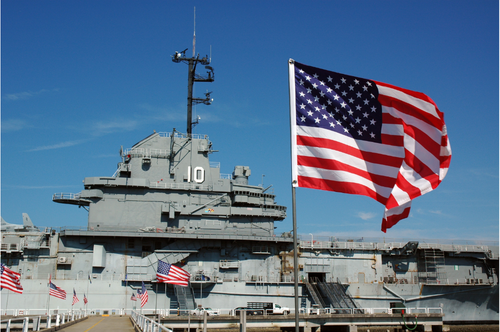
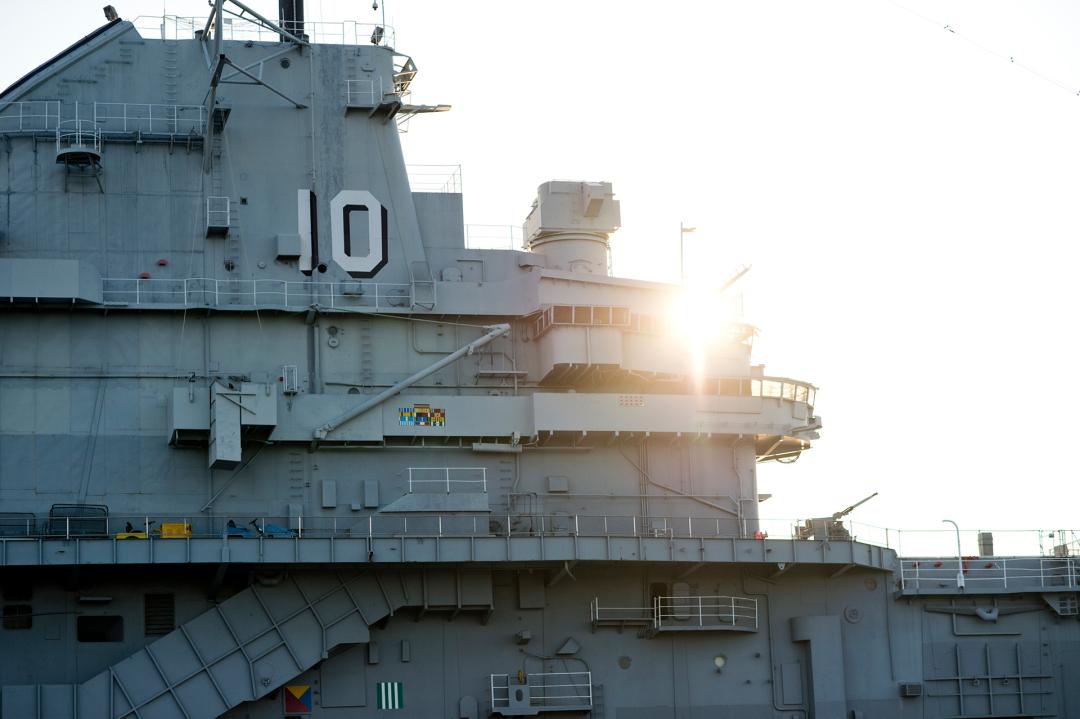
By the late 1930s, the Navy had learned valuable lessons from its early carriers. Free from the restrictions of international naval treaties, designers developed the larger and more powerful Essex-class aircraft carriers. Among them was USS Yorktown (CV-10), the ship that now serves as the centerpiece exhibit at Patriots Point Naval & Maritime Museum.
Many Essex-class carriers honored famous battles, ships, and figures from American history. Some, including Yorktown (CV-10), Lexington (CV-16), Hornet (CV-12), and Wasp (CV-18), also served as memorials to earlier carriers lost during World War II. Other Essex-class carriers honored Revolutionary War battles, including Ticonderoga (CV-14), Bunker Hill (CV-17), and Bennington (CV-20). Ships such as Franklin (CV-13), Randolph (CV-15), and Hancock (CV-19) recognized influential figures from the Revolutionary era. Additional names celebrated naval victories and historic ships from later conflicts, including the Barbary Wars, the War of 1812, and even World War II itself.
With more than two dozen Essex-class carriers eventually entering service, the Navy had numerous opportunities to honor important chapters in American history.
A Name that Endures
The USS Yorktown (CV-10) represents the culmination of more than two decades of innovation in naval aviation, but her story reaches much further into the past. Her name connects her to the original Yorktown vessels that served the nation long before aircraft carriers even existed. It also links her to the pivotal battle that helped secure American independence and ultimately gave birth to the nation whose 250th anniversary we celebrate today.
The most recent Navy ship to carry the name was the guided missile cruiser USS Yorktown (CG-48), which served from 1984 to 2004. Today, the name Yorktown still awaits its next vessel and mission.
Regardless of the class of ship that may one day bear the name, Yorktown will continue to honor generations of sailors, preserve the memory of a defining moment in American history, and serve as a lasting reminder of a legacy that has helped shape our nation for more than 250 years.